Part of our commercial freight series. Start with the guide to dock-to-dock freight delivery in Ontario.
Delivery Tips
How to Prepare a Commercial Shipment for Dock-to-Dock Delivery
A well-prepared shipment moves faster and arrives with less risk of damage or delay. Here is how to prepare a shipment for freight delivery, covering everything a shipping department should check before the truck arrives.
Why preparation matters more than it seems
Most freight delays and damage claims trace back to preparation, not the road. A pallet that is not wrapped tightly, a label that fell off in transit, or a weight listed incorrectly on the bill of lading can slow a shipment down long before it reaches its destination. Knowing how to prepare a shipment for freight delivery is one of the simplest ways a shipping department can control outcomes it might otherwise blame on the carrier.
This matters just as much for dock-to-dock freight delivery as it does for anything else, because dock-to-dock relies on both ends handling freight quickly and predictably. A pallet that is awkward to move, mislabeled, or missing paperwork slows down a process that should take minutes.
Packaging
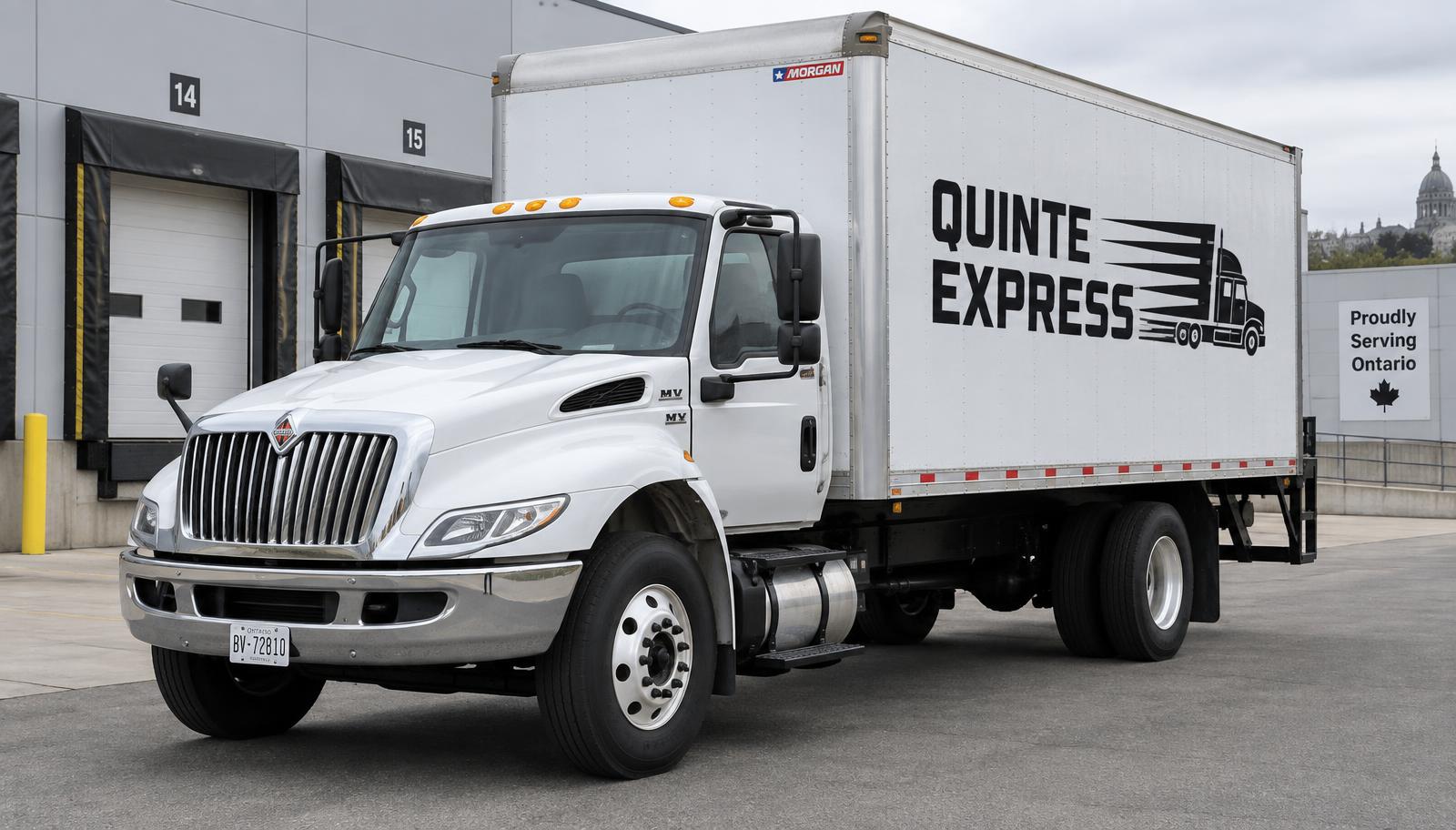
Individual items inside a shipment should be boxed or crated appropriately for handling and stacking, not just for the trip itself. Freight gets moved several times between pickup and final delivery — onto a pallet, onto a truck, off a truck, into a building — and packaging needs to hold up through each handling point, not just survive the drive.
Fragile or irregularly shaped items benefit from extra internal protection and clear exterior marking, such as this side up or fragile, even though handling instructions cannot guarantee a specific orientation throughout transit. Where possible, standardise box sizes within a shipment to make palletizing and stacking easier.
Palletizing
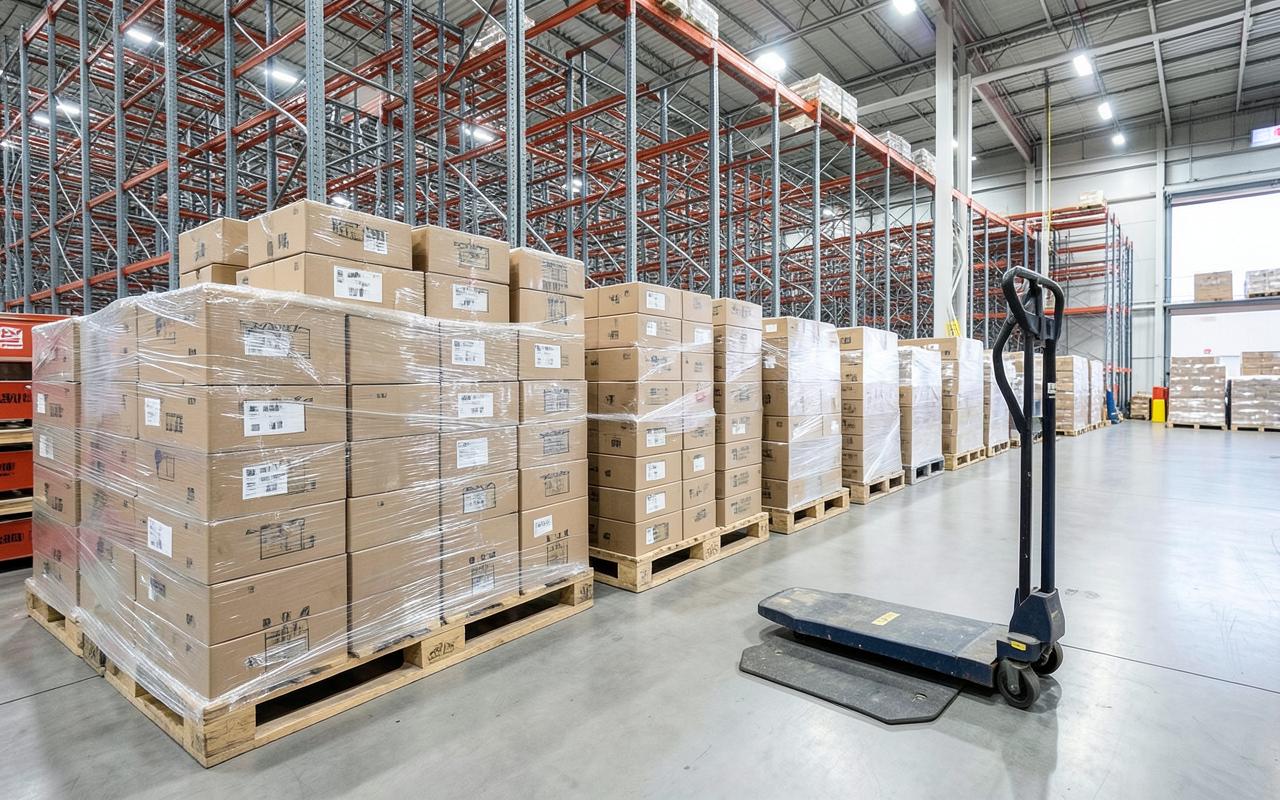
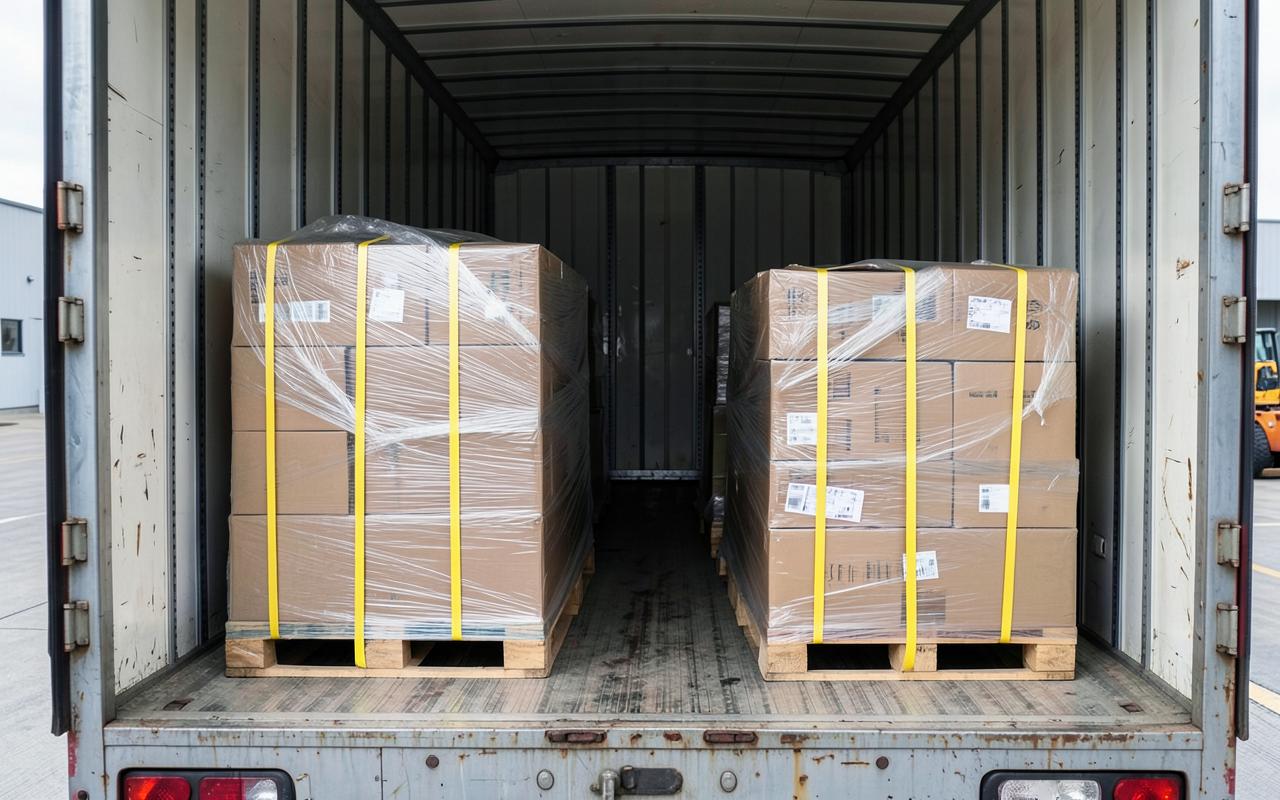
A well-built pallet is the single biggest factor in how smoothly a shipment moves. Use pallets in good condition, free of broken boards or protruding nails, and size the load so nothing overhangs the edges of the pallet. Overhang creates a hazard when the pallet is jacked or forklifted and makes stacking other freight around it unsafe.
Distribute weight evenly across the pallet, keeping the heaviest items on the bottom and centred, and avoid stacking so high that the load becomes unstable or exceeds the receiving dock's stacking limits. A pallet that leans or shifts during transit is far more likely to arrive damaged.
Quick palletizing checks
Before a pallet goes on the truck, confirm:
- No boards broken, no nails or splinters protruding
- Nothing overhangs the pallet edge in any direction
- Heaviest items on the bottom, load centred and balanced
- Stack height reasonable for the product and for stacking other freight nearby
- Load feels stable when gently rocked, not loose or shifting
Labelling and documentation
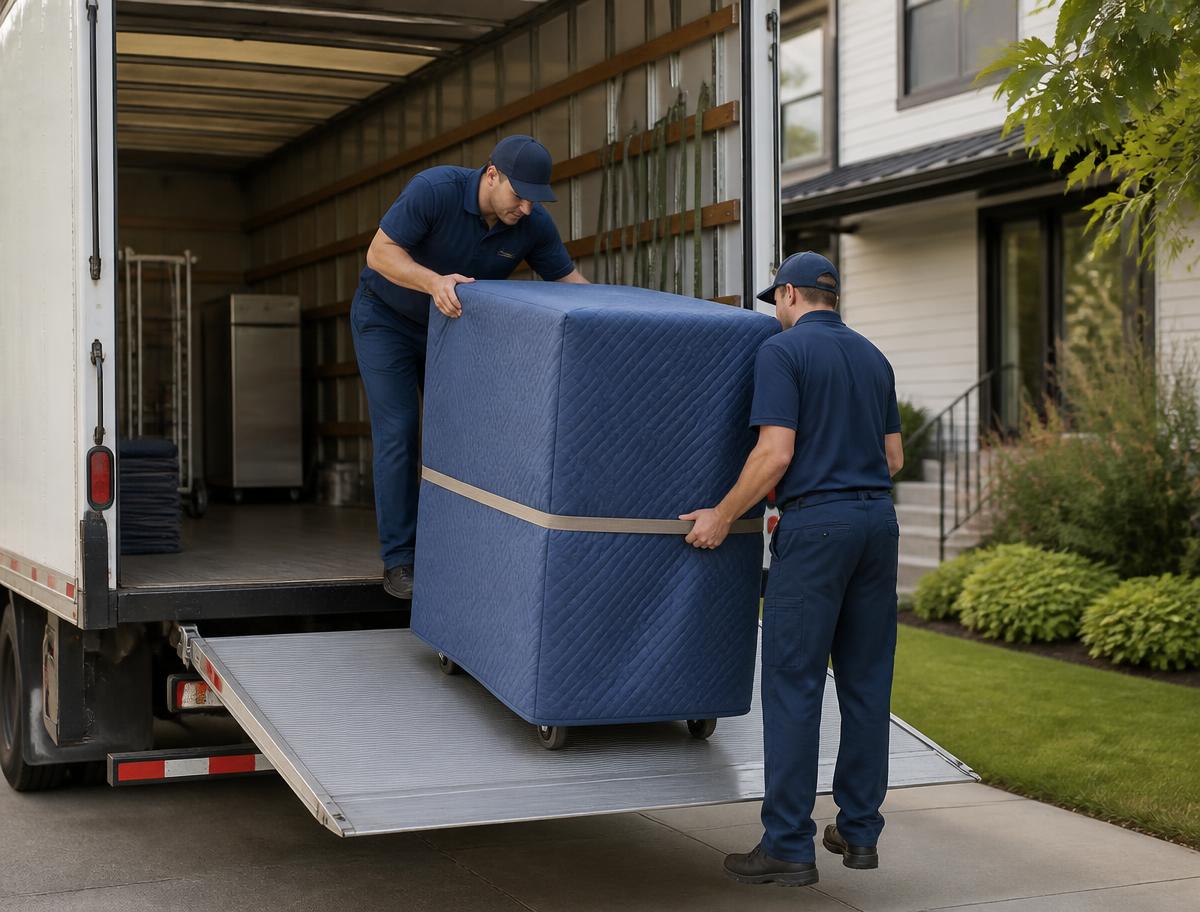
Every pallet and package should be labelled on more than one side, ideally on all four, since a driver or dock worker may only see one face of a stack at a time. Labels should include the consignee name and address, a PO number or reference number, and the piece count for that shipment, such as pallet 2 of 4.
Paperwork should travel with the shipment, not just exist in an email somewhere. A complete bill of lading, a packing slip listing contents, and any special handling instructions should be attached to the shipment or handed to the driver at pickup, since this is often the first document checked at the receiving dock.
Dimensions, weight and equipment selection
Give the carrier accurate dimensions and weight for every pallet, not estimates. This information determines what equipment gets booked, whether that is a cargo van, a straight truck with a liftgate, or a dock-to-dock booking with no lift required at all. Underestimating weight or size can mean the wrong vehicle shows up, which causes delays or a failed pickup.
For businesses that ship regularly, keeping a simple record of typical pallet weights and dimensions by product line speeds up future bookings and reduces the chance of a mismatch between what was quoted and what actually needs to move.
Stretch wrap, corner boards and load stability
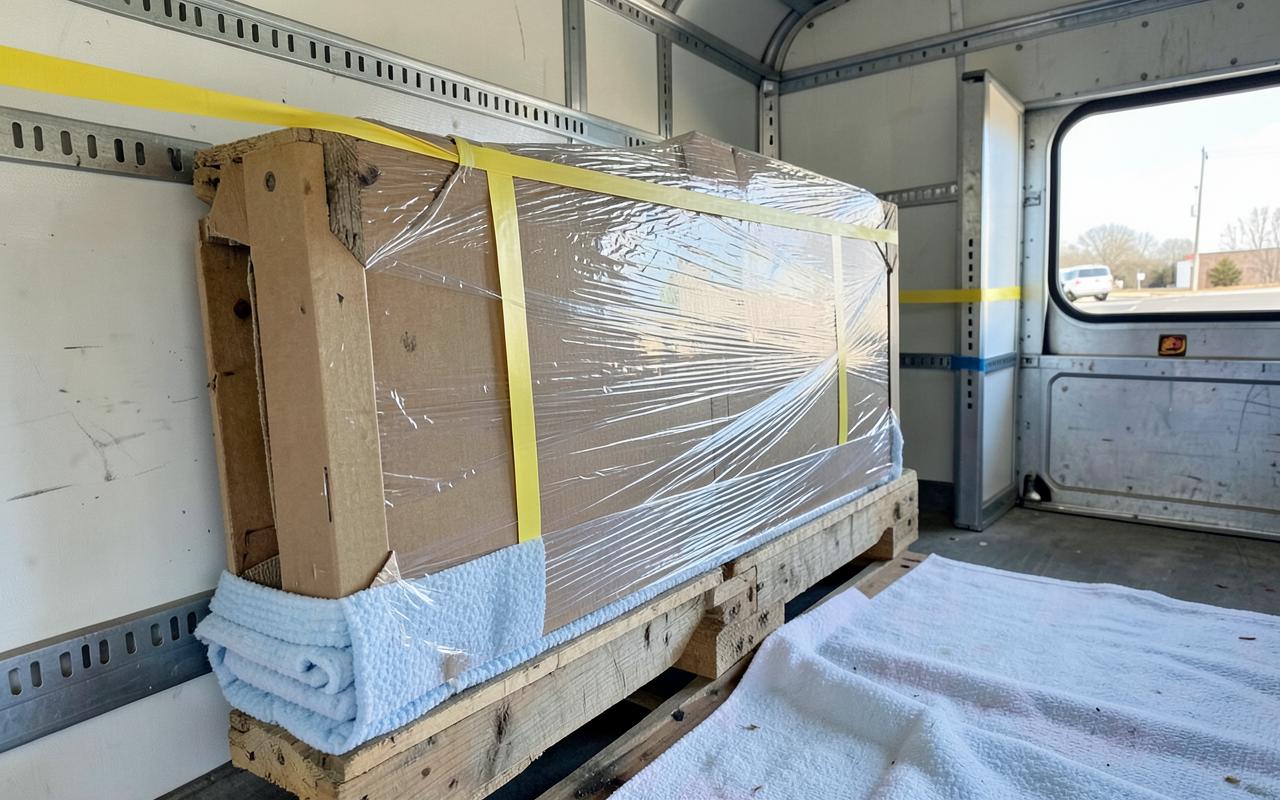
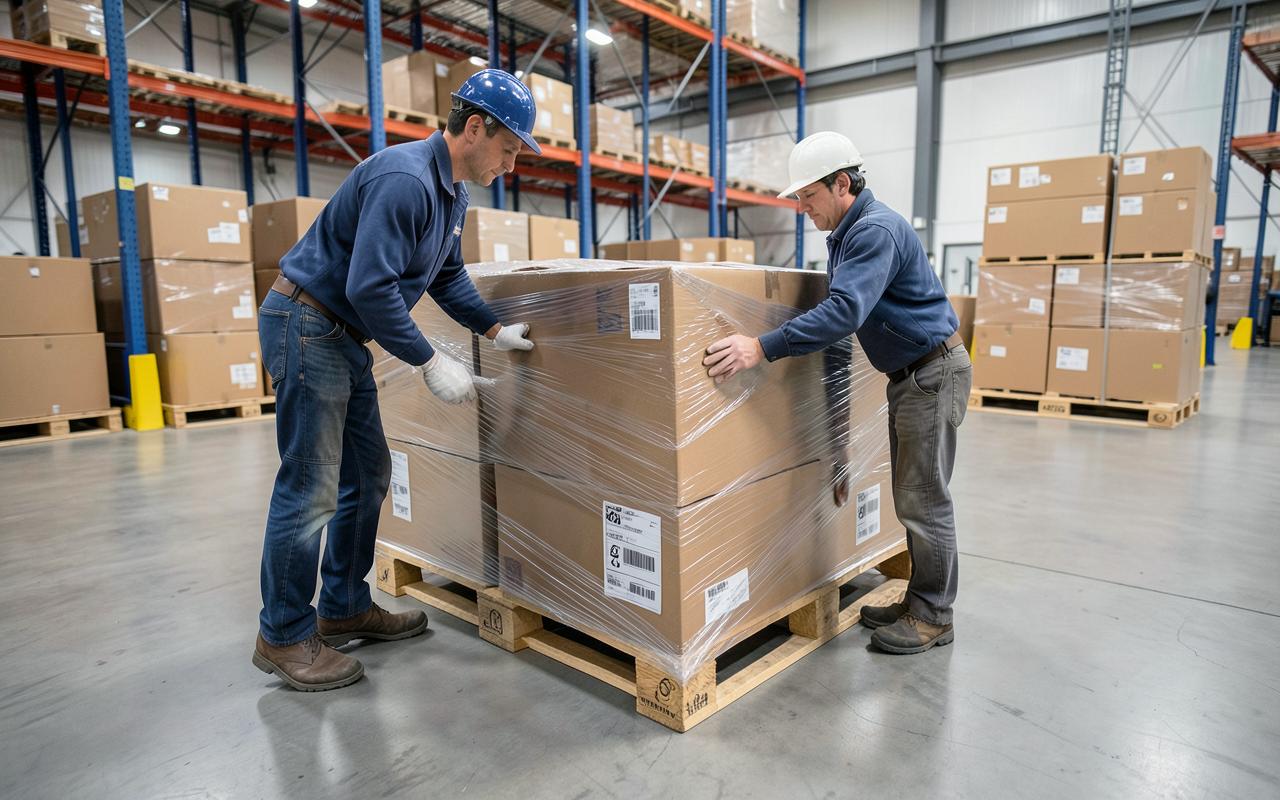
Stretch wrap should go around the entire pallet, including a wrap or two around the base to anchor the load to the pallet itself, not just around the boxes. Corner boards add rigidity to stacked cartons and protect edges from being crushed by strapping or by other freight.
For taller or top-heavy pallets, banding in addition to stretch wrap adds another layer of security. None of this needs to be elaborate — the goal is simply a pallet that stays exactly as it was built from pickup to final receiving dock.
Receiving details the carrier needs
Preparation is not only about the freight itself — it is also about telling the carrier what to expect at the destination. Confirm whether the receiver has a dock or needs liftgate delivery, whether a forklift or pallet jack will be available, and the receiving hours or any appointment requirement.
Include a contact name and phone number at both the shipping and receiving ends, along with any delivery instructions, such as a specific door to use, a buzzer code, or a note that the shipment needs to go to a particular department. These small details prevent a driver from arriving and not knowing where to go.
A master checklist before the truck arrives
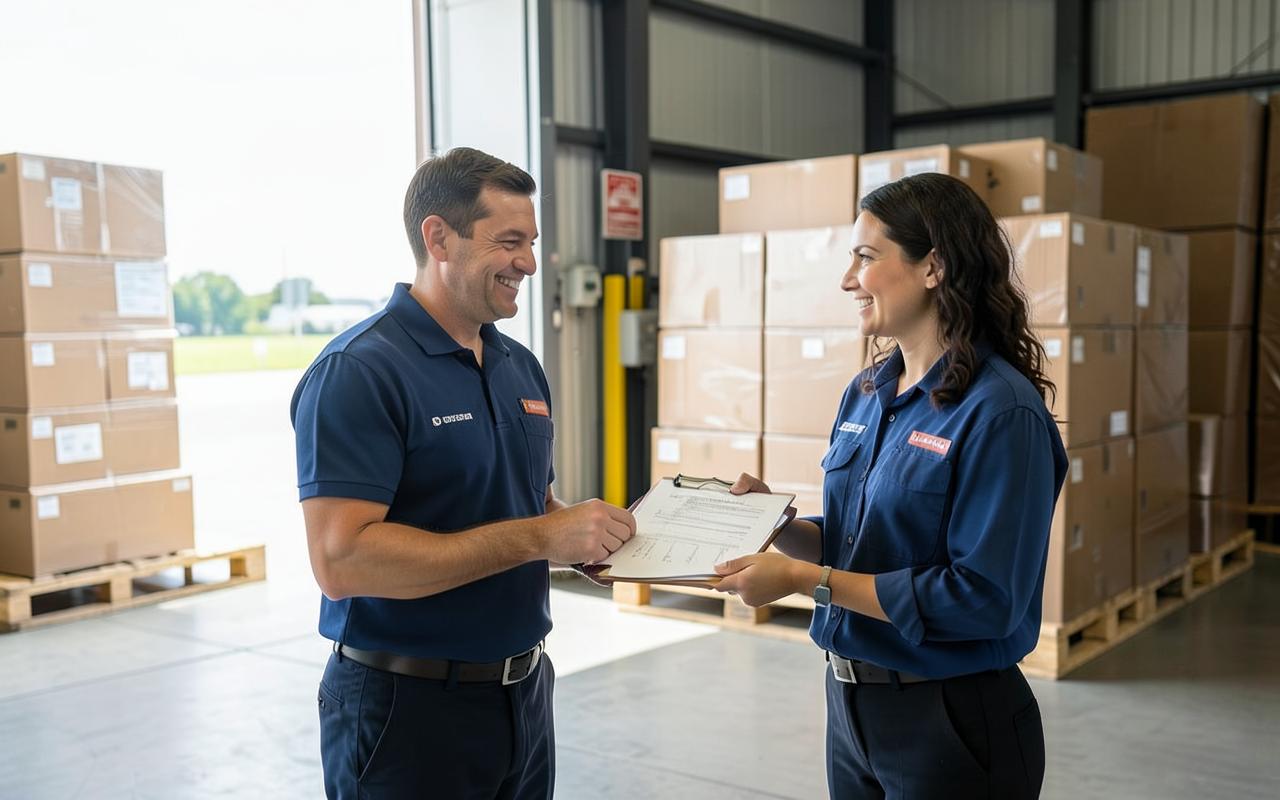
Pulling all of this together, a shipping department preparing freight for pickup should run through one final pass before the truck arrives. This is the same review Quinte Express recommends to shippers who want dock-to-dock delivery to move smoothly on both ends. Once the shipment is ready, our walkthrough of how dock-to-dock delivery works from pickup to receiving dock shows what happens next.
- Pallets built to good condition, no overhang, weight distributed and centred
- Stretch wrap applied to the full pallet including the base, corner boards where needed
- Labels on multiple sides with consignee, PO number and piece count
- Accurate dimensions and weight provided to the carrier for the right equipment
- Bill of lading, packing slip and special instructions ready at pickup
- Receiving details confirmed: dock or liftgate, forklift availability, hours, appointment
- Contact names and phone numbers provided for both shipping and receiving ends
Getting ready for your next shipment
Good preparation is not extra work, it is what keeps a dock-to-dock shipment moving at the pace it is supposed to. A pallet that is built, wrapped, and labelled correctly, with accurate paperwork and clear receiving instructions, gives the carrier everything needed to move it efficiently from one dock to another.
If you are getting a shipment ready and want to confirm equipment or receiving requirements before pickup, request a quote and we can walk through the details with you.
Frequently asked
- How many sides should a pallet be labelled on?
- Ideally all four sides, or at minimum two adjacent sides, since a driver or dock worker often only sees one face of a stacked pallet at a time. Consistent labelling avoids confusion about which pallet belongs to which shipment.
- What happens if my pallet weight is inaccurate?
- Inaccurate weight can result in the wrong equipment being booked for the shipment, which may cause a delay or a failed pickup if the vehicle cannot safely handle the actual load. Always provide measured or clearly estimated weights, not guesses.
- Do I need a bill of lading for every shipment?
- Yes, a bill of lading is standard documentation for commercial freight and should travel with the shipment or be handed to the driver at pickup. It confirms what is being shipped, from where, and to whom, and is often checked at the receiving dock.
- Should I stretch wrap boxes that are already sealed?
- Yes. Even sealed boxes should be stretch wrapped as part of a pallet to keep the load unified and stable during transit. Wrapping individual boxes without palletizing them does not provide the same stability as a properly built and wrapped pallet.
- What if I do not know whether the receiver has a dock?
- Ask before the shipment is booked, or provide the carrier with the receiving address so they can confirm. Not knowing in advance can lead to booking the wrong equipment, which may delay delivery or require a second attempt.
Services in this article
More delivery tips guides
More from the commercial freight series
- What Is Dock-to-Dock Delivery? A Complete Guide for Ontario Businesses
- Dock-to-Dock vs. Curbside Delivery: Which Is Right for Your Business?
- Warehouse-to-Warehouse Freight Delivery Across Ontario
- Commercial Freight Delivery Between Toronto and Eastern Ontario
- Belleville Freight Delivery: Connecting Warehouses, Suppliers and Businesses
- Kingston Commercial Freight Delivery: A Guide for Local Businesses
Get your shipment ready right
Whether it is one pallet or a full truckload, we can confirm packaging, labelling and receiving requirements before pickup so nothing gets delayed. [Request a quote](/#quote) and let us help you plan the details.