Part of our commercial freight series. Start with the guide to dock-to-dock freight delivery in Ontario.
Logistics & Transportation
When Should Your Business Use a 26-Foot Straight Truck for Freight Delivery?
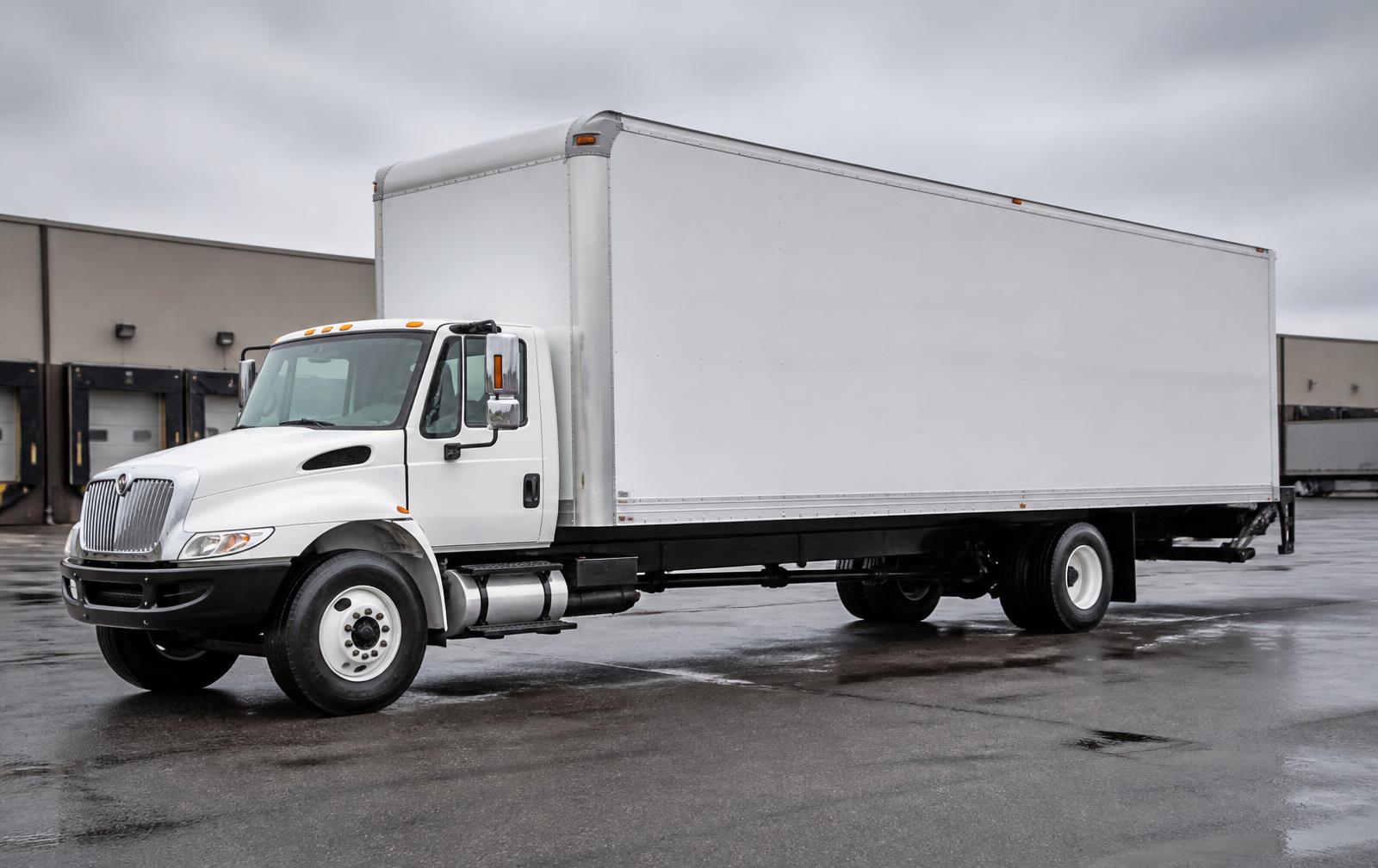
A 26 ft straight truck offers a practical middle ground for straight truck delivery in Ontario — enough capacity for palletized freight, with better access than a full tractor-trailer.
A practical middle ground for commercial freight
Not every commercial shipment needs a full tractor-trailer, and not every delivery can be handled by a cargo van. A 26 ft straight truck fills the space between the two, offering enough capacity for multiple pallets while remaining manoeuvrable enough for tighter urban and industrial locations.
For background on how these deliveries fit into the broader freight process, our guide to dock-to-dock freight delivery in Ontario explains the general flow from pickup to receiving dock, which applies whether the vehicle is a straight truck or a larger trailer.
Businesses that ship regularly along Eastern Ontario routes often find that a straight truck strikes the right balance between the flexibility of a smaller vehicle and the capacity needed for multi-pallet commercial orders, without the scheduling complexity that can come with larger equipment.
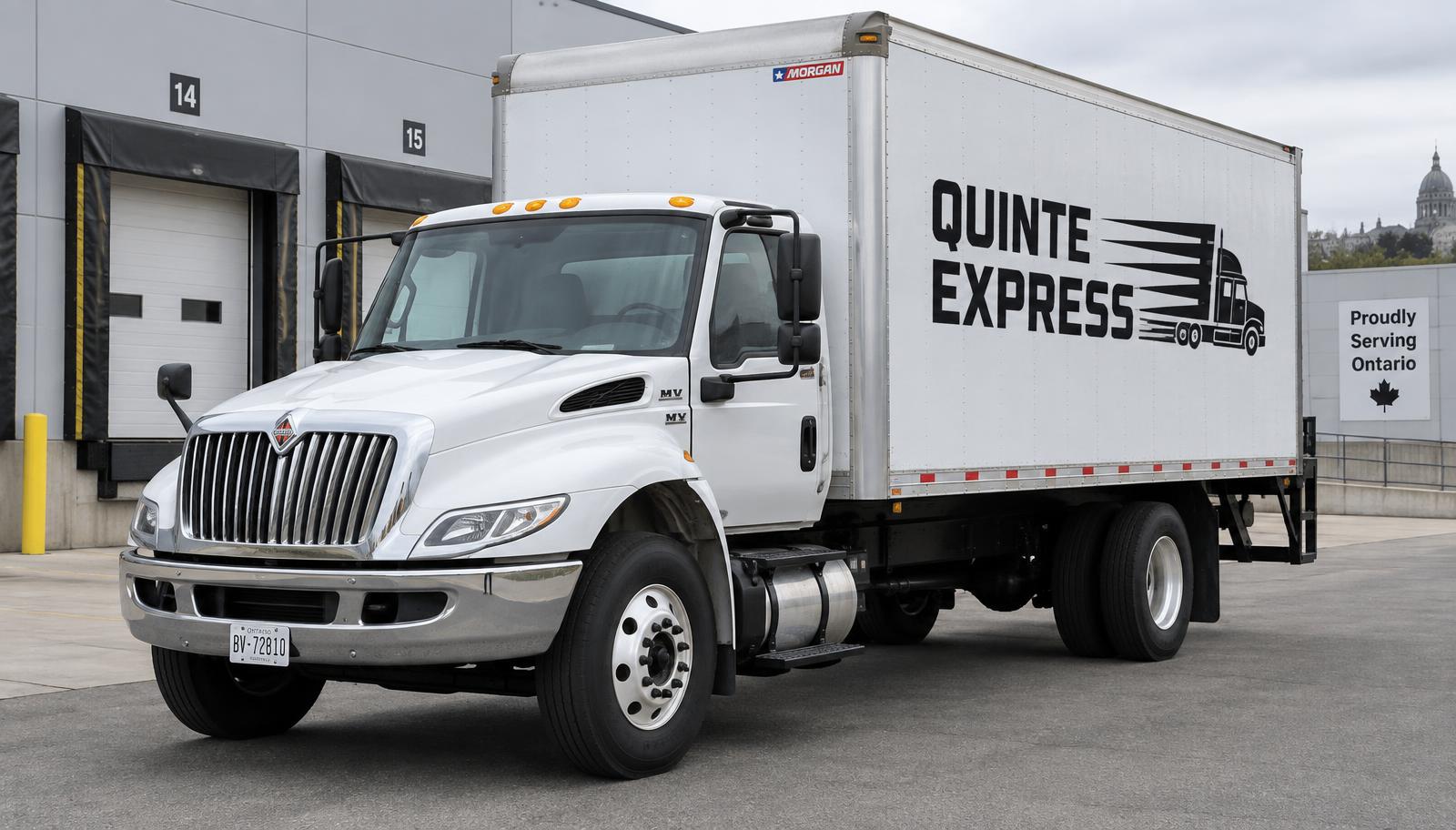
Typical uses for a 26 ft straight truck
Straight truck delivery in Ontario most often falls into a handful of common categories: palletized commercial freight, retail restocking, warehouse-to-warehouse transfers, and general distribution runs that don't require a full trailer's capacity.
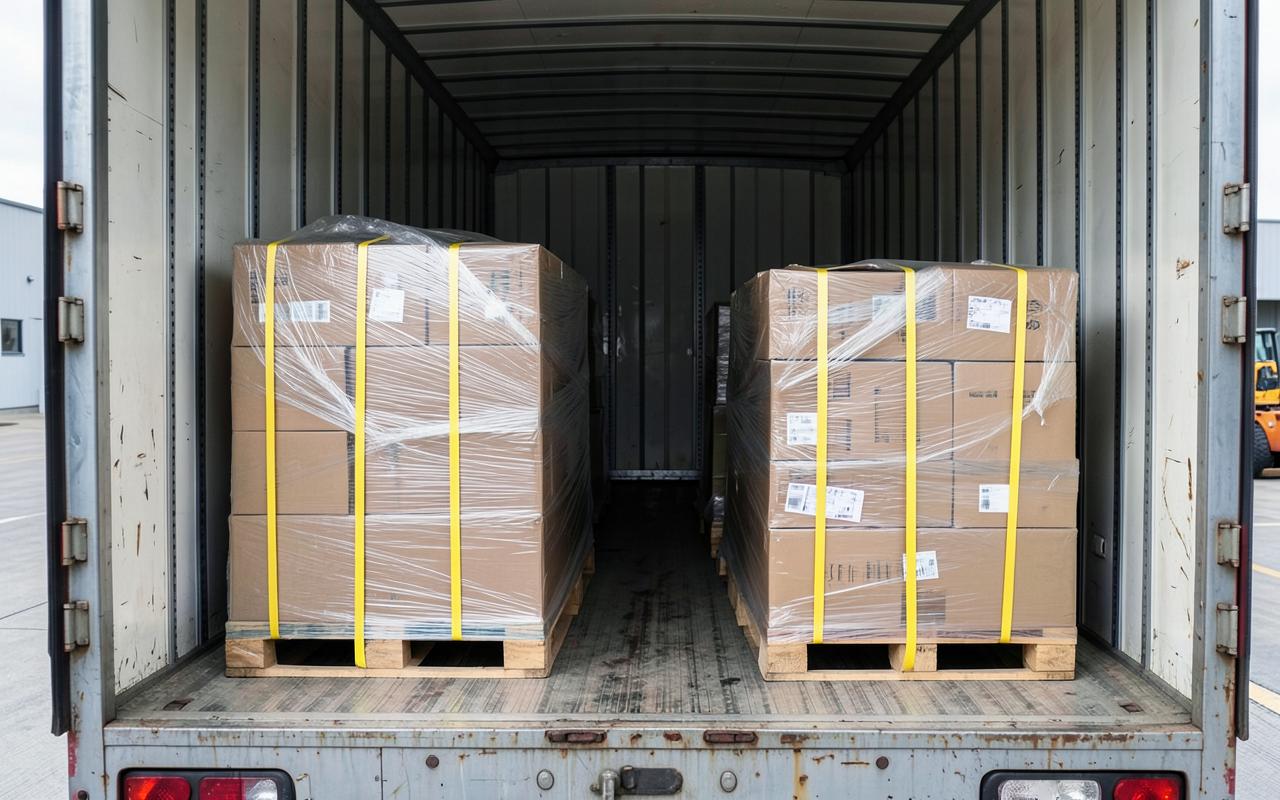
A 26 ft straight truck can generally carry roughly 10 to 12 standard 48x40 pallets single-stacked, though this is approximate and varies depending on the specific truck's box dimensions and configuration. That range covers a large share of commercial shipments without the overhead of booking a larger vehicle.
Distribution runs combining several smaller drop-offs in one trip are another common use, since the truck's capacity allows multiple partial-pallet orders to be consolidated onto a single vehicle without requiring a much larger trailer.
- Palletized freight moving between warehouses or distribution centres
- Retail restocking runs from a distribution centre to a storefront
- Warehouse transfers within a regional network
- Job site material delivery for contractors
- Multi-stop regional routes combining several smaller deliveries
- Deliveries to locations with limited dock or street access
Equipment that matters for this type of delivery
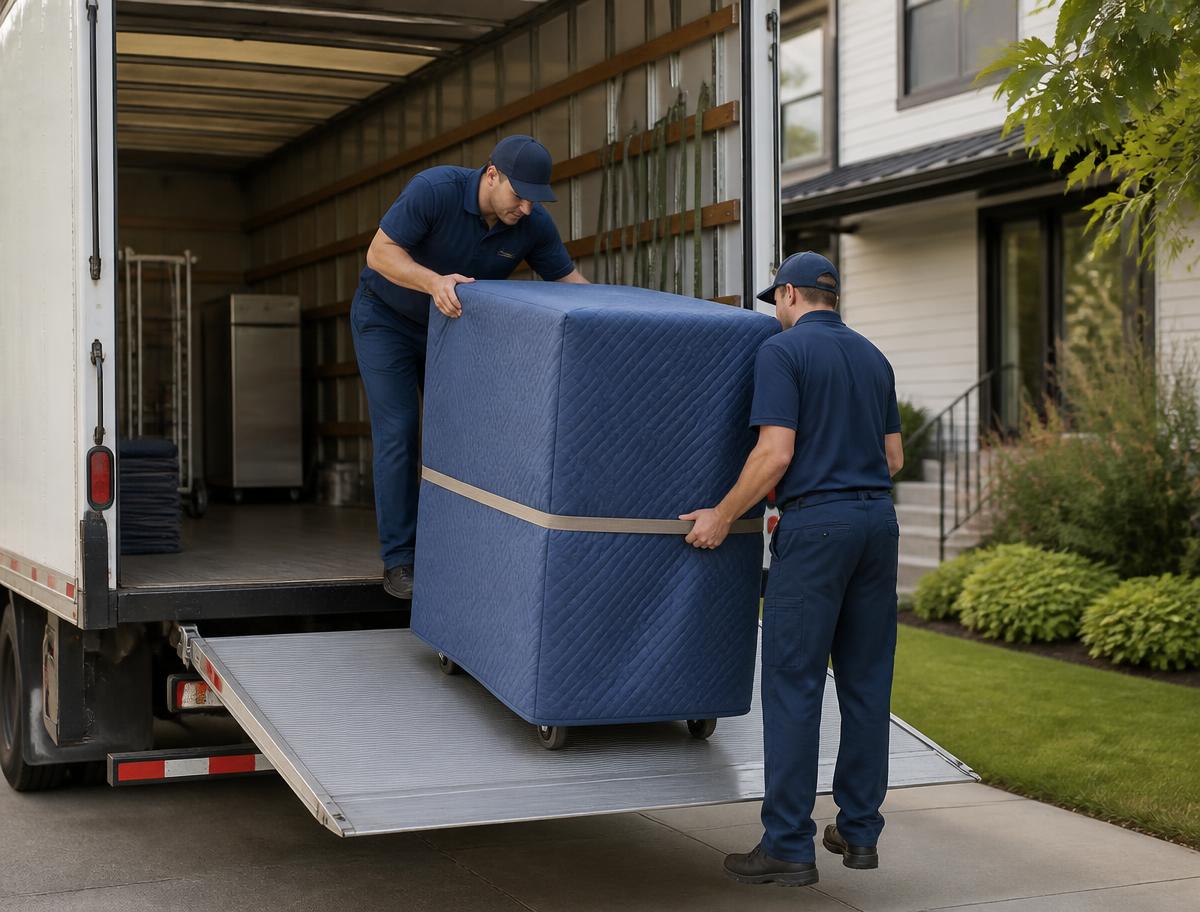
The value of a 26 ft straight truck comes as much from its equipment as its size. A power liftgate allows freight to be lowered to ground level at locations without a loading dock, which is common in older commercial buildings and many downtown cores.
E-track systems and logistics straps keep pallets secured during transit, reducing shifting on the highway and through city streets. Because box dimensions vary by truck, it's worth confirming pallet capacity and interior height with your carrier before booking, particularly for taller or irregularly shaped freight.
Dock-height loading
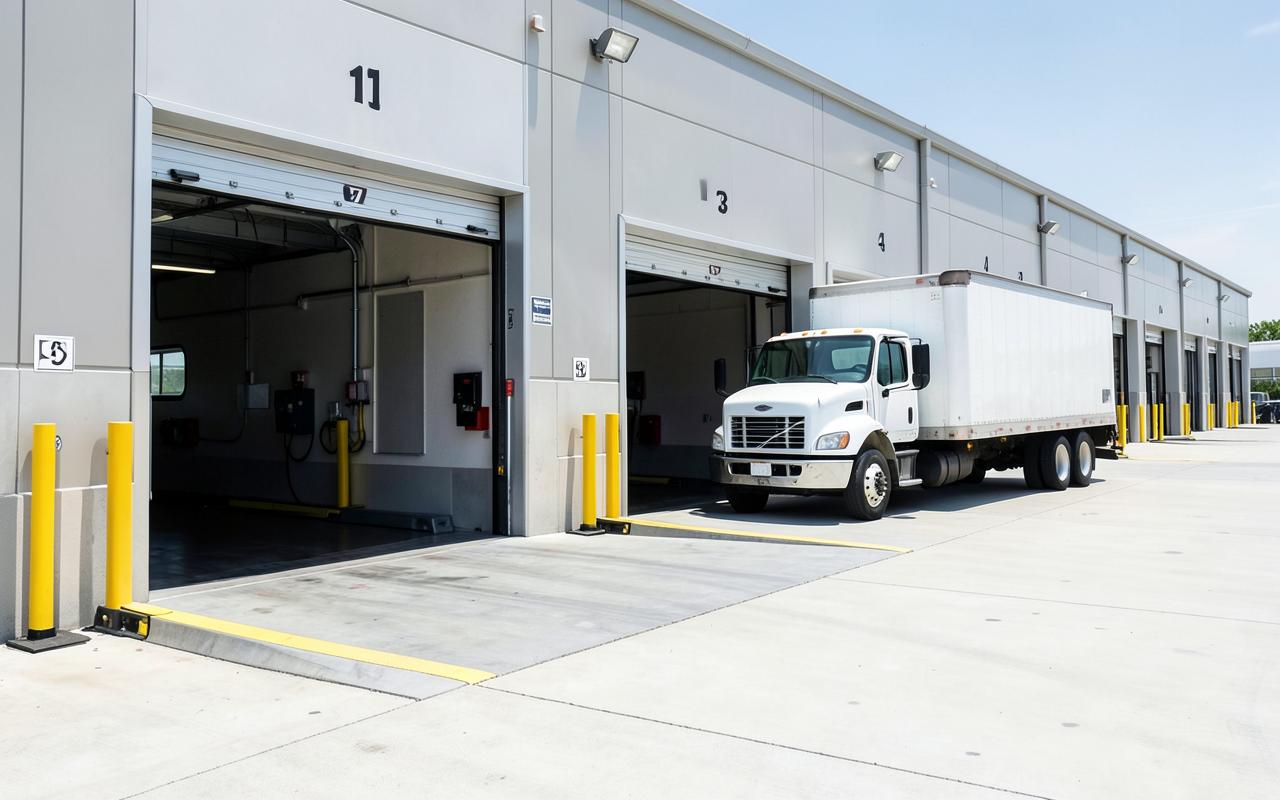
At locations with a proper loading dock, a straight truck backs up level with the dock and freight is moved directly using a pallet jack, similar to how a trailer would be unloaded, just at a smaller scale.
Ground-level loading
At locations without a dock, the power liftgate lowers pallets to grade, where they can be moved into the building using a pallet jack or hand cart. This is common for retail stores, smaller warehouses and many job sites.
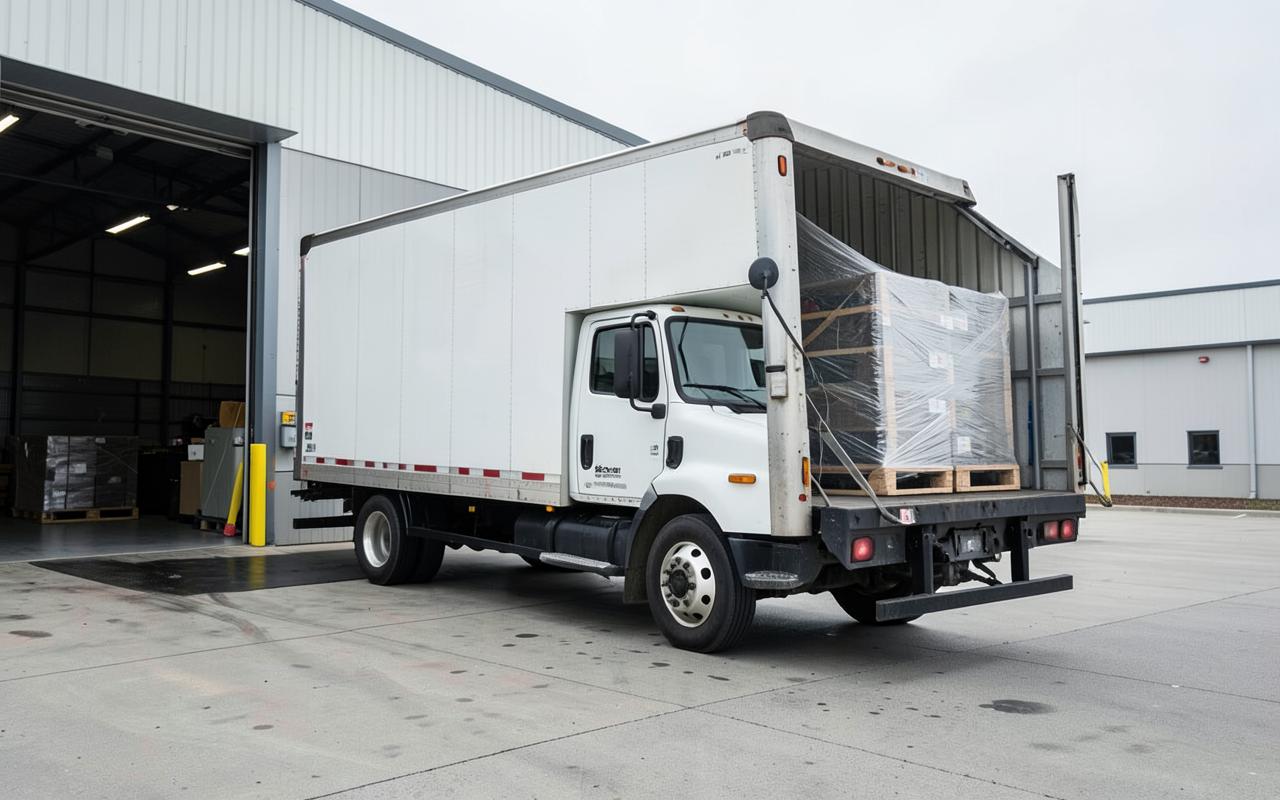
Where straight trucks outperform tractor-trailers
Access is the biggest advantage a straight truck offers over a full tractor-trailer. Older industrial areas, tight downtown cores and many job sites simply weren't built with 53 ft trailers in mind — narrow lanes, low overhead clearances and limited turning radius can rule out larger vehicles entirely.
A straight truck can reach these locations while still carrying a meaningful volume of palletized freight, making it the practical choice for a large share of Ontario's commercial freight delivery needs outside of major distribution hubs.
This access advantage extends to seasonal or time-sensitive deliveries as well. A contractor working on a renovation in a historic downtown building, for example, may have no realistic way to receive a tractor-trailer shipment, making a straight truck the only practical option for getting materials on site.
Because these vehicles are smaller and lighter than a tractor-trailer, they can also access delivery windows and time slots in busy commercial areas that may otherwise restrict larger truck traffic, giving businesses more flexibility in scheduling.
Straight truck vs. other delivery options
Businesses often compare a 26 ft straight truck against two alternatives: a smaller cargo van for very light loads, or dedicated truck delivery using a larger vehicle for bigger volumes. Choosing between them usually comes down to pallet count and site access.
Our detailed comparison of straight truck vs. cargo van breaks down when a van's 1–2 pallet capacity is sufficient versus when the added capacity of a straight truck is worth it. For situations involving a mismatch between the vehicle and receiving dock, our article on liftgate freight delivery covers when that equipment becomes essential rather than optional.
For many Ontario businesses, the decision ultimately comes down to matching vehicle size to typical order volume — choosing equipment that comfortably handles the majority of shipments rather than sizing every delivery around the rare oversized order.
A quick fit-check before booking
Before deciding whether a 26 ft straight truck is right for a shipment, it helps to run through a short checklist.
- Estimate total pallet count and confirm it fits within roughly 10–12 single-stacked skids
- Check whether the receiving location has a loading dock or needs a liftgate
- Measure any access constraints, such as narrow streets or low clearances
- Confirm whether the freight needs E-track strapping for stability
- Decide whether the shipment is a one-off or part of a recurring route
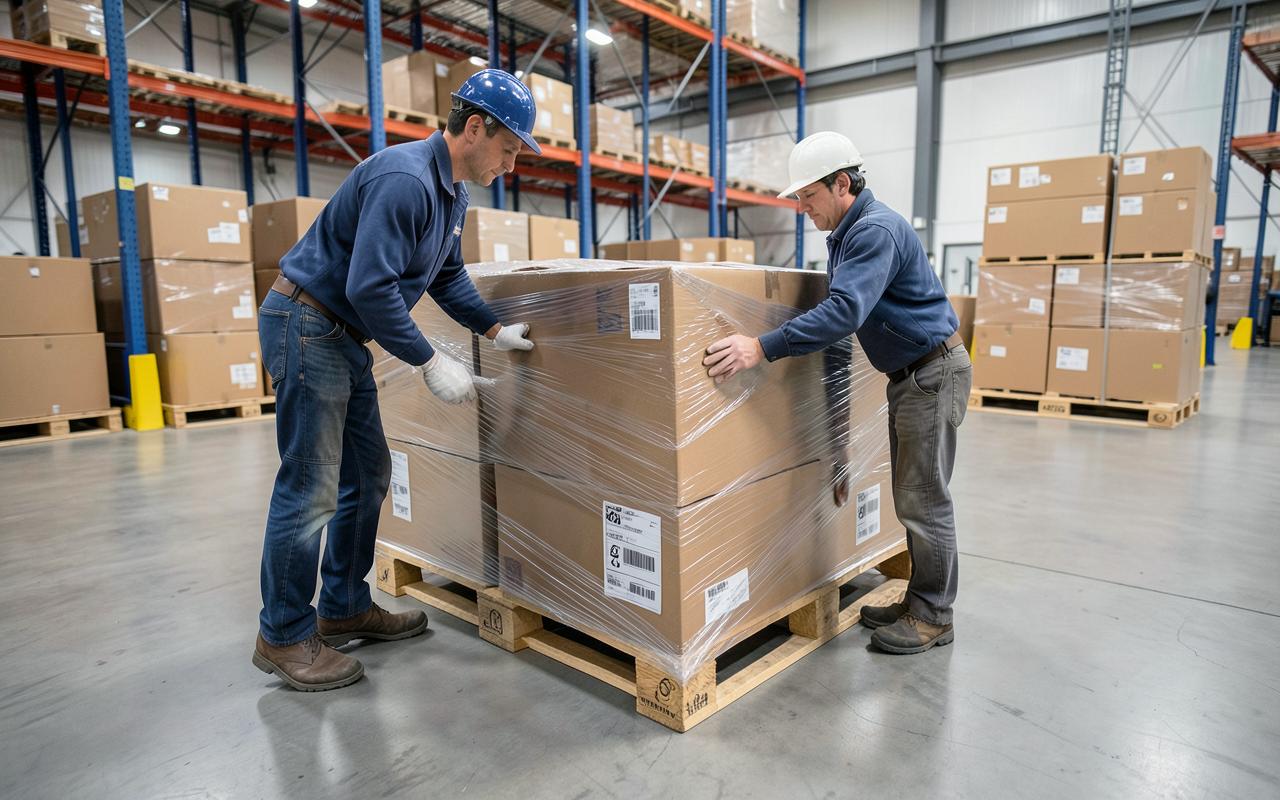
Choosing the right truck for your next shipment
A 26 ft straight truck offers a practical balance of capacity and access for most commercial freight moving around Ontario's cities and job sites. It's well suited to palletized retail, warehouse and distribution deliveries, particularly in areas where a full tractor-trailer isn't practical.
You can see the equipment we run, including our 26 ft straight trucks with power liftgates and cargo vans, on our fleet page. If you have a shipment that needs the right-sized vehicle for the job, request a quote and we'll match the equipment to your freight and delivery location.
Frequently asked
- How many pallets fit on a 26 ft straight truck?
- Roughly 10 to 12 standard 48x40 pallets single-stacked, though this is approximate and depends on the specific truck's box dimensions and how the freight is configured.
- Do 26 ft straight trucks have liftgates?
- Many do, including trucks used for straight truck delivery to Ontario locations without a loading dock. A power liftgate lowers freight to ground level for unloading.
- Can a straight truck deliver to a location with a loading dock?
- Yes. A straight truck can back up to a standard loading dock much like a larger trailer would, just at a smaller scale, making it flexible for both dock and ground-level deliveries.
- Is a straight truck better than a tractor-trailer for downtown deliveries?
- Often, yes. Straight trucks are more manoeuvrable in tight downtown cores, older industrial areas and job sites where a 53 ft trailer may not be able to access the location at all.
- What is the payload capacity of a 26 ft straight truck?
- Payload varies by vehicle, but trucks in this class are commonly rated up to around 10,000 lb, which covers a wide range of palletized commercial freight.
Services in this article
More logistics & transportation guides
More from the commercial freight series
- What Is Dock-to-Dock Delivery? A Complete Guide for Ontario Businesses
- Dock-to-Dock vs. Curbside Delivery: Which Is Right for Your Business?
- Warehouse-to-Warehouse Freight Delivery Across Ontario
- How Dock-to-Dock Delivery Works From Pickup to Final Receiving Dock
- Commercial Freight Delivery Between Toronto and Eastern Ontario
- Belleville Freight Delivery: Connecting Warehouses, Suppliers and Businesses
Need the right truck for your freight?
Our 26 ft straight trucks with power lift gates and E-track strapping handle palletized commercial freight across Ontario, from loading docks to ground-level job sites. Request a quote to get started.