Fleet
26 ft Straight Truck vs Cargo Van: Picking the Right Vehicle
Deciding between a 26 ft straight truck and a cargo van depends on cargo volume, urban accessibility, and specialized equipment needs for Ontario logistics.
The Heavyweight Champion: The 26 ft Straight Truck
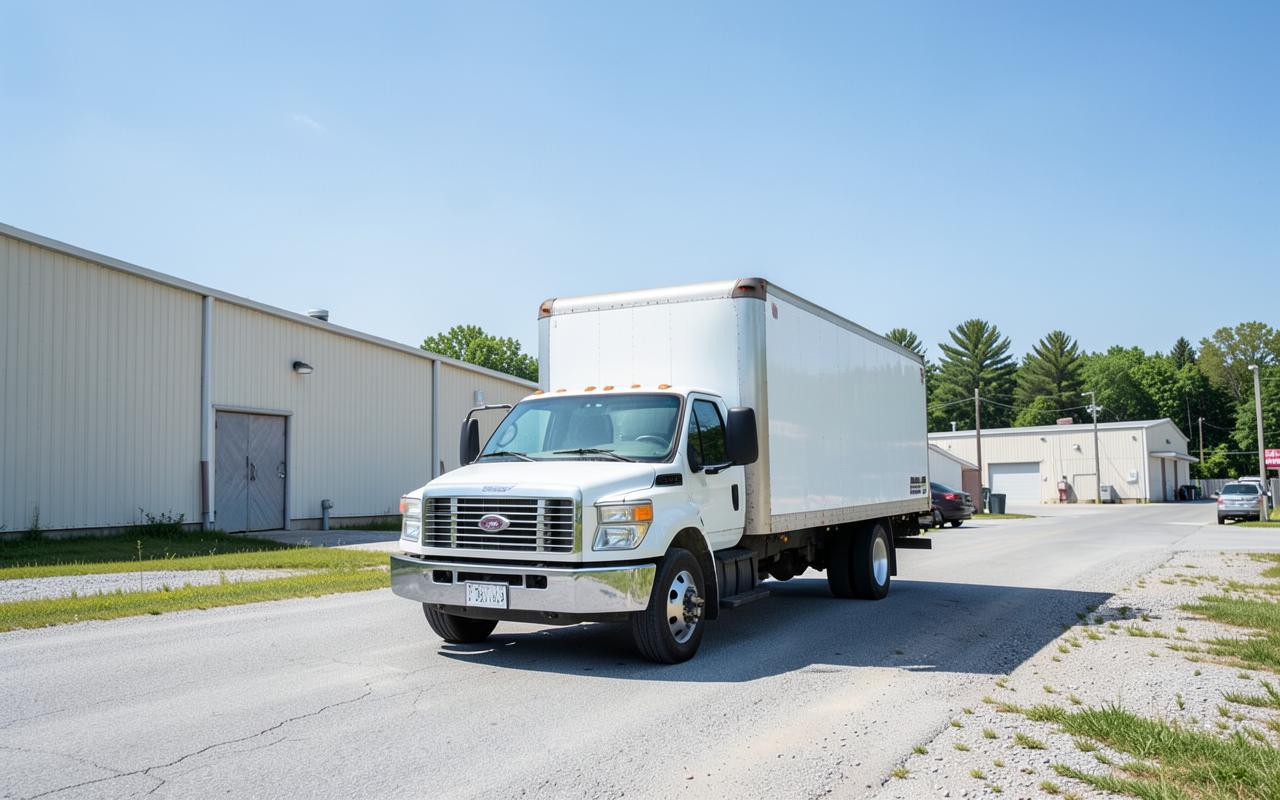
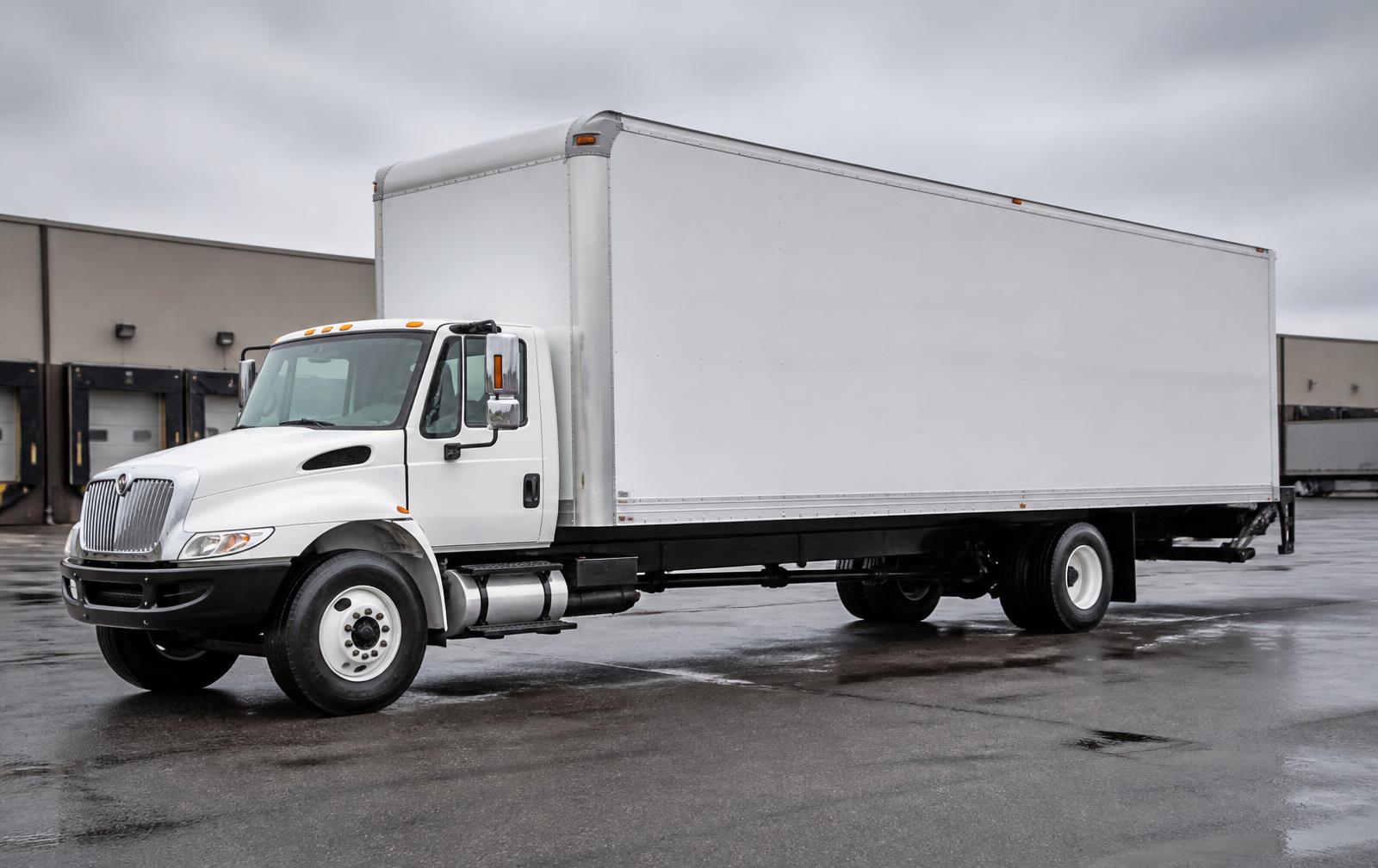
The 26-foot straight truck is the undisputed powerhouse of the medium-duty logistics world. Boasting an internal volume of approximately 1,700 cubic feet, this vehicle is designed to bridge the gap between small delivery vans and heavy-duty tractor-trailers. Its boxy dimensions provide a standardized space that allows for efficient stacking of boxes, furniture, and palletized commercial goods. In Ontario’s competitive logistics landscape, these trucks are commonly utilized for full residential moves, multi-stop retail distributions, and heavy equipment transport. The sheer vertical height—often reaching 95 to 103 inches inside—permits the stacking of lightweight goods to the ceiling, maximizing the yield of a single trip.
Beyond its internal volume, the defining characteristic of our 26-foot fleet is the inclusion of heavy-duty hydraulic lift gates. These gates are essential for locations lacking a raised loading dock, such as residential driveways, storefronts, or construction sites. Without a lift gate, a driver and helper would be forced to manually hoist 300-pound appliances or industrial pallets, increasing the risk of workplace injuries and cargo damage. The 26-footer provides a stable, wide-track platform that handles wind resistance and highway speeds better than smaller trucks when fully loaded, making it the primary choice for long-haul routes between Belleville, Kingston, and the Greater Toronto Area.
Choosing this vehicle also involves understanding its physical footprint. A truck of this size requires significant clearance—not just for height (often 12'6" to 13'6"), but for turning radii. Narrow cul-de-sacs or driveways with low-hanging tree branches can present significant obstacles. However, for a two-bedroom to four-bedroom home, or a business receiving 10 to 12 standard pallets, there is simply no substitute for the capacity of a straight truck. It ensures that the entire job is completed in a single run, reducing fuel surcharges and labor hours that would otherwise be spent on multiple trips using smaller vehicles.
- Total cargo volume: Approximately 1,700 cubic feet.
- Weight capacity: Generally ranges from 8,000 to 10,000 lbs of payload.
- Hydraulic lift gate: Essential for curbside and residential deliveries.
- Standard pallet capacity: Accommodates 12 to 14 standard 48x40 pallets.
- Ideal for: 3+ bedroom apartments, office relocations, and bulky appliances.
The Urban Navigator: The Versatile Cargo Van
In the dense urban centers of Ontario, such as downtown Kingston or the narrow corridors of Ottawa’s market district, the cargo van is the ultimate logistical tool. Unlike its larger counterparts, the cargo van offers a compact footprint that allows it to navigate through standard parking lots, alleyways, and even some underground residential garages. With a cargo volume ranging from 250 to 500 cubic feet depending on the roof height, it is perfectly suited for 'last-mile' logistics where speed and accessibility take precedence over sheer volume. For a business shipping a single engine part or a homeowner moving a solitary antique dresser, the van is the most efficient choice.
Operational efficiency is a major driver behind the cargo van's popularity. These vehicles consume significantly less fuel than a 26-foot truck and are easier to maneuver through heavy traffic during peak hours in the Golden Horseshoe. They also benefit from lower toll rates on highways like the 407 ETR and can often park in designated commercial loading zones that are too small for a box truck. Because they sit lower to the ground, loading and unloading smaller parcels is often faster, as the driver can step directly into the cargo area without waiting for a hydraulic lift gate to cycle up and down.
Despite its smaller size, the modern cargo van is surprisingly robust. High-roof models allow workers to stand upright inside while organizing packages, which reduces physical strain during high-volume courier routes. The van is the go-to solution for white-glove courier services involving sensitive documents, high-value electronics, or medical supplies that require a climate-controlled environment or extra security. When the cargo fits within the van's dimensions, the cost-to-benefit ratio is nearly unbeatable, especially for time-sensitive, point-to-point deliveries across Eastern Ontario.
- Maximum agility: Fits in standard parking spots and low-clearance garages.
- Cost-effective: Lower fuel consumption and reduced toll expenses.
- Speed: Faster loading/unloading for small parcel runs.
- Weather protection: Fully enclosed steel body protects against harsh Ontario winters.
- Ideal for: Single-item deliveries, emergency parts, and document couriers.
Volume vs. Access: The Critical Trade-off
The most fundamental question in choosing between these two vehicles is whether the volume of the cargo demands the truck, or the access at the destination demands the van. A 26-foot truck can carry nearly five times the volume of a standard van, but it is effectively useless if it cannot reach the delivery point. We often encounter situations where a client has a large amount of furniture but lives on a narrow, one-way street with low-hanging power lines. In these specific cases, a 'shuttle service' might be required, where a van moves the goods from a larger truck parked nearby to the final destination. Understanding these constraints early saves time and money.
Conversely, attempting to use a cargo van for a job that clearly requires a straight truck leads to inefficiency. If a move requires four or five trips in a van, the labor costs will skyrocket, and the time spent in transit will quadruple. It is always more economical to pay the higher hourly rate for a straight truck that can finish the job in four hours than to pay for a van and two movers for twelve hours. Our dispatch team in Belleville analyzes the inventory list and the destination geometry to ensure the vehicle provided is the most logical fit for both the cargo and the environment.
Environmental factors also play a role in this decision. During the winter months in Ontario, heavy snow and ice can make steep driveways impassable for a large 26-foot truck, which is rear-wheel drive and carries a significant amount of weight. A cargo van, while also typically rear or all-wheel drive, has a shorter wheelbase and lower center of gravity, which can sometimes provide better traction on poorly plowed secondary roads. However, the weight of a fully loaded straight truck can also work in its favor, providing the downward force needed to gain traction on slushy surfaces.

Lift Gate Necessity and Heavy Lifting Logistics
One of the biggest differentiators between the two vehicles is the presence of a hydraulic lift gate. Most 26-foot straight trucks are equipped with a gate capable of lifting between 2,000 and 3,000 pounds. This is a non-negotiable requirement for moving heavy items like commercial refrigerators, gun safes, industrial machinery, or palletized stone. If your delivery involves anything that cannot be safely broken down into 50-pound boxes, the straight truck is the only viable option. The lift gate acts as a mobile loading dock, bringing the cargo from the truck bed level (roughly 48 to 52 inches high) down to the pavement safely.
Cargo vans do not have lift gates. While some specialized vans can be fitted with small internal cranes or ramps, the standard cargo van requires manual lifting or the use of portable ramps for wheeled items. This makes vans unsuitable for heavy pallet work unless a forklift is available at both the pickup and delivery locations to slide the pallet directly into the side or rear doors. For local businesses in Belleville sending out small retail orders, this isn't an issue. But for a manufacturing plant sending out a crated engine, the straight truck’s lift gate is the essential piece of technology that makes the delivery possible.
Safety is another factor tied to the lift gate. Using ramps with heavy furniture on a cargo van can be risky, especially in wet or icy conditions. The flat, level platform of a hydraulic lift gate provides a much more stable surface for movers to operate. When we evaluate a job, we look at the heaviest single item. If that item exceeds the safe lifting capacity of two men, we automatically upgrade the vehicle to a straight truck to ensure the safety of the crew and the integrity of the client's property.
- Lift gate capacity: 2,500 lbs average on straight trucks.
- Dock height compatibility: Straight trucks align perfectly with warehouse docks.
- Manual labor: Vans require more manual lifting for heavy items.
- Ramp usage: Vans often utilize walk-ramps for wheeled dollies.
- Stability: Lift gates offer superior safety for high-value heavy goods.
Navigating Ontario’s Urban and Rural Infrastructure
Operating a logistics fleet in Eastern Ontario means dealing with a diverse range of infrastructure, from the modern highways of the 401 corridor to the historic, narrow streets of downtown Kingston and Brockville. A 26-foot straight truck is a king on the highway, offering great visibility and presence. However, once it enters a residential neighborhood, the driver must be wary of 'No Truck' routes and weight-restricted bridges. Many newer suburban developments are designed with tight turns that are difficult for a large truck to navigate without jumping curbs or risking damage to landscaping.
Cargo vans, by contrast, are treated like standard passenger vehicles by most municipal bylaws. They can access parkways where commercial trucks are prohibited and can park in standard street spots. This makes them the ideal choice for 'courier' style work where the driver needs to make 20 or 30 stops in a single day. In cities like Toronto, where parking enforcement is aggressive, the ability to tuck a cargo van into a small alley or a legal parking space is a massive operational advantage that prevents costly tickets and delays.
We also consider the 'overhead' environment. Older commercial buildings and residential apartment complexes often have height restrictions at their loading bays or entrances. A 26-foot truck is typically 13 feet tall, whereas a high-roof cargo van might only be 9 feet tall. We have seen many instances where a truck had to park on the street and the crew had to wheel furniture 200 yards to the building entrance because the truck couldn't clear the overhang. In these scenarios, a van would have been able to pull right up to the door, saving hours of labor.
Cost Drivers: Fuel, Labor, and Efficiency
Budgeting for a delivery or move requires an understanding of how vehicle choice impacts the bottom line. The 26-foot straight truck has a higher base operating cost. It consumes more diesel, requires more expensive insurance, and generally necessitates a two-person crew for safe operation. However, its efficiency comes from its scale. By moving 1,700 cubic feet in one trip, the 'cost per cubic foot' is actually much lower than a cargo van. For large-scale projects, the straight truck is the budget-friendly option because it minimizes the most expensive factor in logistics: time.
The cargo van is the low-cost leader for small, specific tasks. Because it is more fuel-efficient and can be operated by a single driver, the hourly rate or flat-rate delivery fee is significantly lower. For a business in Belleville that needs to send a few boxes to a client in Trenton, the van is the logical choice. Paying for a 26-foot truck to move three boxes is an unnecessary expense. The van also avoids many of the regulatory costs associated with larger commercial vehicles, such as mandatory weigh station stops and more frequent mechanical inspections, allowing those savings to be passed on to the customer.
Beyond fuel and wages, we consider 'hidden' costs like terminal handling and dwell time. A straight truck takes longer to load simply because there is more to pack and secure. It requires more straps, blankets, and decking to ensure the load doesn't shift during transit. A cargo van can be loaded and on the road in minutes. When time is the most critical factor—such as in 'just-in-time' manufacturing deliveries—the cargo van's ability to get moving quickly often outweighs the larger truck's capacity.
- Fuel Type: Straight trucks (Diesel) vs. Vans (Gasoline/Diesel).
- Crew Size: 2-3 people for trucks vs. 1-2 for vans.
- Tolls and Fees: Significantly higher for multi-axle trucks.
- Maintenance: Heavy-duty trucks require more frequent, specialized service.
- Insurance: Commercial cargo insurance varies based on vehicle GVWR.

Packing and Loading Strategies for Each Vehicle
The way we secure cargo differs significantly between these two vehicles. In a 26-foot straight truck, the primary concern is preventing the 'domino effect.' Because the cargo area is so long, an unsecured row of boxes at the front can shift during braking, causing a chain reaction. We use E-track systems, ratcheting straps, and load bars to create 'walls' within the truck. This allows us to segment the load, ensuring that the furniture in the front stays put even if the back of the truck is only half full. Proper weight distribution is also key; we place the heaviest items over the rear axles to maintain vehicle stability.
In a cargo van, the space is much tighter, which actually helps in securing the load. Items can be wedged more effectively to prevent movement. However, because vans often have metal interior walls without the plywood lining found in box trucks, we have to be extra diligent with moving blankets to prevent scratches. The packing process in a van is more about 'Tetris'—fitting irregularly shaped items into a smaller footprint. We often use soft-sided bags and smaller boxes to fill the gaps around larger items, ensuring that nothing can slide when the van takes a sharp corner in city traffic.
Specialized equipment like appliance dollies and four-wheel furniture pads are used in both vehicles, but the way they are deployed changes. In a straight truck, we have the luxury of space to bring along multiple types of dollies and a large stack of 50+ moving blankets. In a van, we have to be more selective about the equipment we carry to avoid cluttering the limited cargo space. Regardless of the vehicle, the goal remains the same: zero movement during transit to ensure the cargo arrives in the exact same condition it was loaded.
Weather Considerations and Seasonal Challenges
Ontario weather is a major variable in the straight truck vs. cargo van debate. During the spring thaw, many rural roads in the Quinte area have 'half-load' restrictions. This means that a fully loaded 26-foot straight truck may be legally prohibited from driving on certain roads to prevent pavement damage. In these instances, we are forced to use cargo vans, which fall under the weight limit, even if it means making more trips. Planning for these seasonal restrictions is a vital part of our service for clients in rural areas surrounding Belleville and Kingston.
In the height of summer, heat can be an issue for certain types of cargo, like electronics or fine art. While neither vehicle is a 'reefer' (refrigerated truck) unless specified, the cargo van's smaller cabin and cargo area are easier to keep somewhat cooler using the vehicle's air conditioning system. In contrast, the cargo box of a 26-foot truck can become quite hot in direct sunlight. We use specialized packing materials and ensure that temperature-sensitive items are loaded last and unloaded first to minimize their exposure to the heat inside the box.
Winter brings the challenge of snow accumulation on the roof of a 26-foot truck. Before leaving our Belleville terminal, drivers must clear the 'snow cap' to prevent ice from flying off on the 401. This is a much simpler task on a cargo van. Additionally, the interior of a cargo van stays warmer because it shares air with the driver's cabin, making it a better choice for transporting items that shouldn't reach sub-zero temperatures, such as certain liquids or delicate adhesives, during a short local run.
Final Checklist: Making Your Decision
Choosing the right vehicle comes down to a few objective measurements and a clear understanding of your logistics needs. Before you call for a quote, take a moment to measure your largest items and estimate the total number of boxes. If you are moving a standard pallet, find out its weight. If you are delivering to a residential area, check for low-hanging trees or narrow entrance gates. Providing this information to our dispatchers allows us to send the right tool for the job, preventing the frustration of a truck that is too big to fit or a van that is too small to carry the load.
Remember that the cost of the vehicle is only one part of the equation. The 'total cost of delivery' includes labor and time. Sometimes, paying more for the 26-foot truck is actually the cheaper option because it cuts the labor time in half. Other times, the van is the clear winner for its speed and agility. We pride ourselves on being transparent about which vehicle is best for your specific situation. We aren't just trying to fill a truck; we are trying to provide the most efficient transport solution possible for our neighbors in Eastern Ontario.
At Quinte Express, we maintain a diverse fleet to ensure we never have to 'force' a job into the wrong vehicle. Whether you need the massive capacity and lift gate of a 26-footer for a corporate relocation or the swift, urban-friendly profile of a cargo van for a last-minute parcel, we have you covered. Our drivers are experienced with both vehicle types and are experts at navigating the unique challenges of the Ontario landscape, from the busy 401 to the quiet streets of Prince Edward County.
- Measure the largest item's height, width, and length.
- Check for height clearances at both pickup and delivery points.
- Determine if a loading dock is available or if a lift gate is required.
- Estimate the total number of pallets or boxes.
- Identify any time-sensitive deadlines that might favor a faster van.
Contact Quinte Express for a Custom Quote
Choosing between a 26-foot straight truck and a cargo van doesn't have to be a guessing game. Our team at Quinte Express is here to help you analyze your cargo, your route, and your budget to find the perfect fit. We serve Belleville, Kingston, Ottawa, Toronto, and everywhere in between with professional, reliable transport services. Whether it's a single high-value item or a full warehouse relocation, we have the equipment and the expertise to get it there safely. Call us today at 613-968-0909 to discuss your next shipment and experience the difference that the right vehicle can make.
Frequently asked
- Can a cargo van carry a standard shipping pallet?
- Yes, most modern cargo vans can fit at least one or two standard 48x40 pallets between the wheel wells. However, because vans lack lift gates, you will need a forklift or a loading dock at both ends of the trip to load and unload the pallets safely.
- Do I need a special license to drive a 26 ft straight truck?
- In Ontario, a standard Class G license allows you to drive a vehicle up to 11,000 kg (24,250 lbs) Gross Weight. Most 26-foot straight trucks fall just under this limit, but it is important to check the specific vehicle rating and ensure you are comfortable with the size.
- Which vehicle is better for moving a one-bedroom apartment?
- For a one-bedroom apartment, a cargo van is often too small, while a 26-foot truck might be larger than necessary. However, a 16-foot or 26-foot straight truck is usually safer to ensure everything fits in one trip, especially if you have large furniture like a sofa and mattress.
- What happens if a 26 ft truck cannot fit down my street?
- If a large truck cannot safely access your address, we use a 'shuttle' method. We bring a cargo van to transfer the items from the large truck to your door. This is common in historic downtown areas or very rural locations with narrow bridges.
Services in this article
Book this service in Belleville
Quinte Express is locally owned in Belleville, Ontario — white glove, last mile, furniture, appliance and parcel delivery across Kingston, Trenton, Ottawa and all of Ontario.