Last Mile
How to Choose a Last Mile Delivery Partner in Eastern Ontario
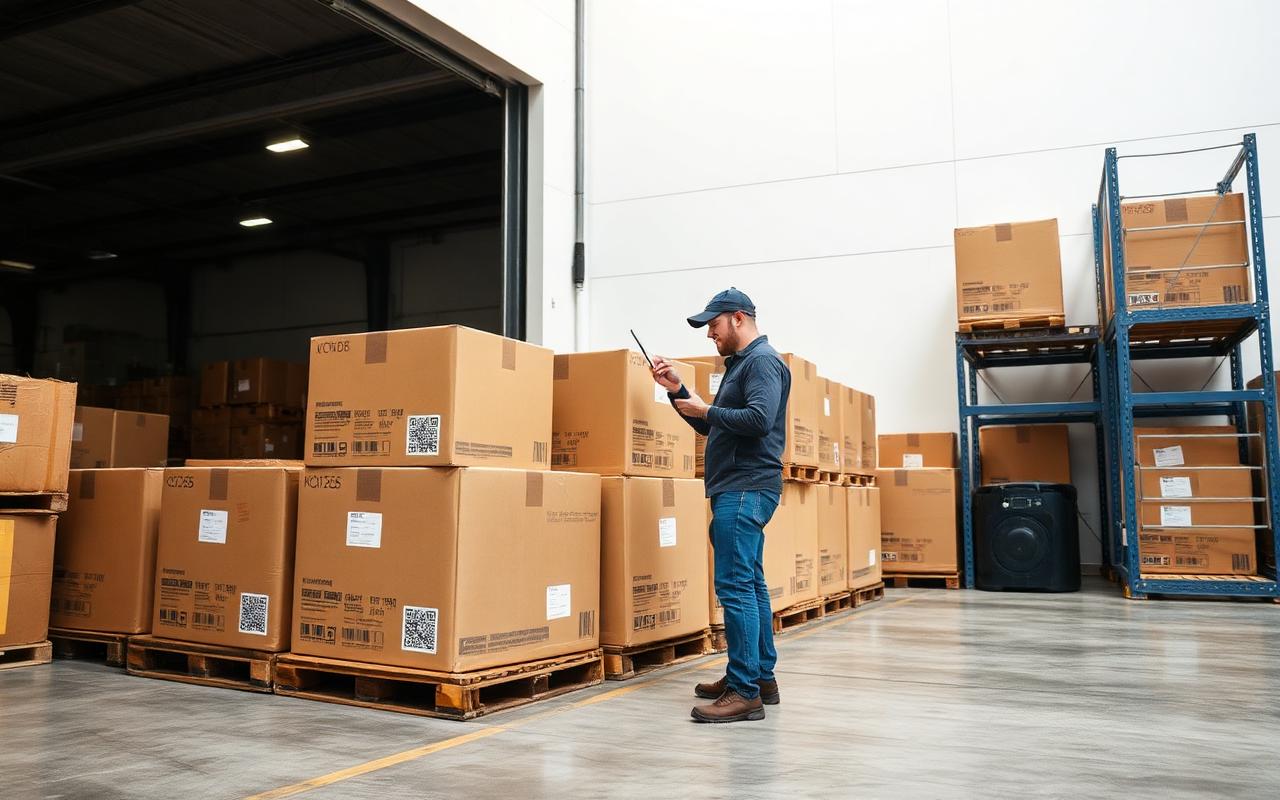
Selecting the right last mile partner in Eastern Ontario requires vetting compliance, equipment, and local expertise to ensure customer satisfaction and brand integrity across the Highway 401 corridor.
The Critical Role of Last Mile Delivery in Eastern Ontario
In the modern retail and manufacturing landscape, the final leg of the supply chain—the last mile—has become the most significant touchpoint for customer satisfaction. In Eastern Ontario, where the geography ranges from the dense urban corridors of Ottawa and Kingston to the rural stretches of Prince Edward County and the Lanark Highlands, the complexity of this task cannot be overstated. When a customer orders a high-value appliance, a piece of custom furniture, or industrial equipment, they do not judge the brand by the efficiency of the factory or the sleekness of the website; they judge it by the professionalism of the driver who pulls into their driveway. A single botched delivery can erase years of brand loyalty, making the choice of a delivery partner one of the most consequential business decisions you will make.
Choosing a partner in this region requires a nuanced understanding of the local landscape. Unlike the Greater Toronto Area, where density allows for high-frequency routing, Eastern Ontario demands a carrier capable of balancing efficiency with the long-haul requirements of serving dispersed communities. You need a partner who understands the logistics of navigating the 401 corridor during lake-effect snowstorms just as well as they understand the tight residential streets of downtown Belleville or the heritage districts of Kingston. This guide is designed to provide you with the rigorous framework necessary to vet potential carriers, ensuring they meet the high standards of compliance, service, and reliability that your customers expect and deserve.
Regulatory Compliance and Risk Mitigation
Before discussing delivery windows or pricing models, you must verify that a carrier is legally and financially sound. In Ontario, this starts with the Commercial Vehicle Operator's Registration (CVOR). A carrier’s CVOR standing is a public record of their safety performance, including collisions, inspections, and convictions. A partner with a 'Satisfactory' or 'Excellent' rating demonstrates a commitment to road safety that protects your brand from the vicarious liability associated with accidents. You should also request a current WSIB clearance certificate to ensure that you are not held responsible for workplace injuries occurring during the delivery process. Neglecting these foundational checks can lead to catastrophic legal exposure if an incident occurs on a customer’s property.
Insurance coverage is the next pillar of risk mitigation. Standard freight insurance often falls short when dealing with white-glove, in-home deliveries where the risk of property damage is as high as the risk of cargo damage. You must ensure the carrier carries sufficient General Liability, Cargo Insurance, and specialized coverage for in-home transitions. Ask for a certificate of insurance that specifically names your company as an additional insured party. This provides a direct line of protection and ensures that if a refrigerator door scratches a hardwood floor or a heavy sofa damages a drywall corner during a tight turn, the financial burden does not fall back onto your balance sheet.
- Request a current CVOR Abstract to review safety ratings and violation history.
- Verify WSIB clearance certificates to avoid liability for driver injuries.
- Ensure Cargo Insurance limits cover the full replacement value of a typical truckload.
- Confirm General Liability coverage includes specific provisions for in-home property damage.
- Ask for a written protocol on how the carrier handles expired or lapsing insurance documents.
Vetting the Human Element: Driver Screening and Training
The drivers and swamping crews are the face of your company. In Eastern Ontario, where community reputation travels fast, the demeanor and appearance of the delivery team are paramount. A professional partner should have a rigorous screening process that includes criminal background checks, vulnerable sector screening (especially important for in-home service), and a clear policy on drug and alcohol testing. Beyond security, inquire about their training programs. Are the crews trained in basic assembly, or do they simply drop boxes at the threshold? Do they understand the technical requirements of leveling a washing machine or the delicate handling needed for antique cabinetry? A carrier that invests in its people is less likely to suffer from high turnover, which leads to more consistent service for your clients.
Technical skills must be matched by soft skills. Last mile delivery is often a high-stress environment, particularly when navigating narrow staircases or dealing with frustrated customers who have waited weeks for an order. A quality partner trains their staff in conflict resolution and customer communication. They should be uniformed, wear protective indoor footwear (or use booties), and possess the spatial awareness to navigate a home without leaving marks. Ask potential partners about their 'crew consistency'—do they send the same teams on specific routes? Familiarity with the region and the specific types of products you sell allows drivers to anticipate challenges before they arrive at the doorstep, turning a potential service failure into a success.
- Inquire about the frequency of background checks for all delivery personnel.
- Ask for details on the 'White Glove' training manual or onboarding process.
- Confirm that crews are provided with appropriate PPE and floor protection tools.
- Verify if the carrier uses full-time employees or daily-hire subcontractors.
- Assess the carrier's uniform policy to ensure a professional brand representation.

Advanced Logistics and Real-Time Visibility
Modern customers expect a level of transparency that was unimaginable a decade ago. The 'black hole' of delivery, where a customer waits all day for a truck that may or may not arrive, is no longer acceptable. A top-tier last mile partner in Eastern Ontario must offer robust technological integration. This includes automated SMS or email notifications that alert the customer when their order has left the warehouse, when they are next in the queue, and a final 'five minutes away' call. This visibility reduces the number of failed delivery attempts—which are costly for you and frustrating for the customer—and allows for a seamless handoff of goods.
The Proof of Delivery (POD) process is equally critical for your back-office operations. Gone are the days of smudged carbon-copy signatures. A digital POD system should provide high-resolution photographs of the item in situ, a clear time-and-date stamp, and a geo-tagged confirmation of the delivery location. This documentation is your first line of defense against 'non-delivery' claims or disputes regarding pre-existing damage. Furthermore, the carrier's system should integrate with your own inventory management software, providing real-time updates so your customer service team can answer inquiries without having to call the dispatcher and wait for a callback.
- Automated delivery windows sent via SMS or email 24-48 hours in advance.
- Live GPS tracking links for customers on the day of delivery.
- Digital Proof of Delivery (POD) with mandatory photo documentation of the product and its surroundings.
- Real-time status updates (Out for Delivery, Arrived, Completed) synced to your dashboard.
- Automated post-delivery surveys to capture immediate customer feedback.
Specialized Handling and Equipment Requirements
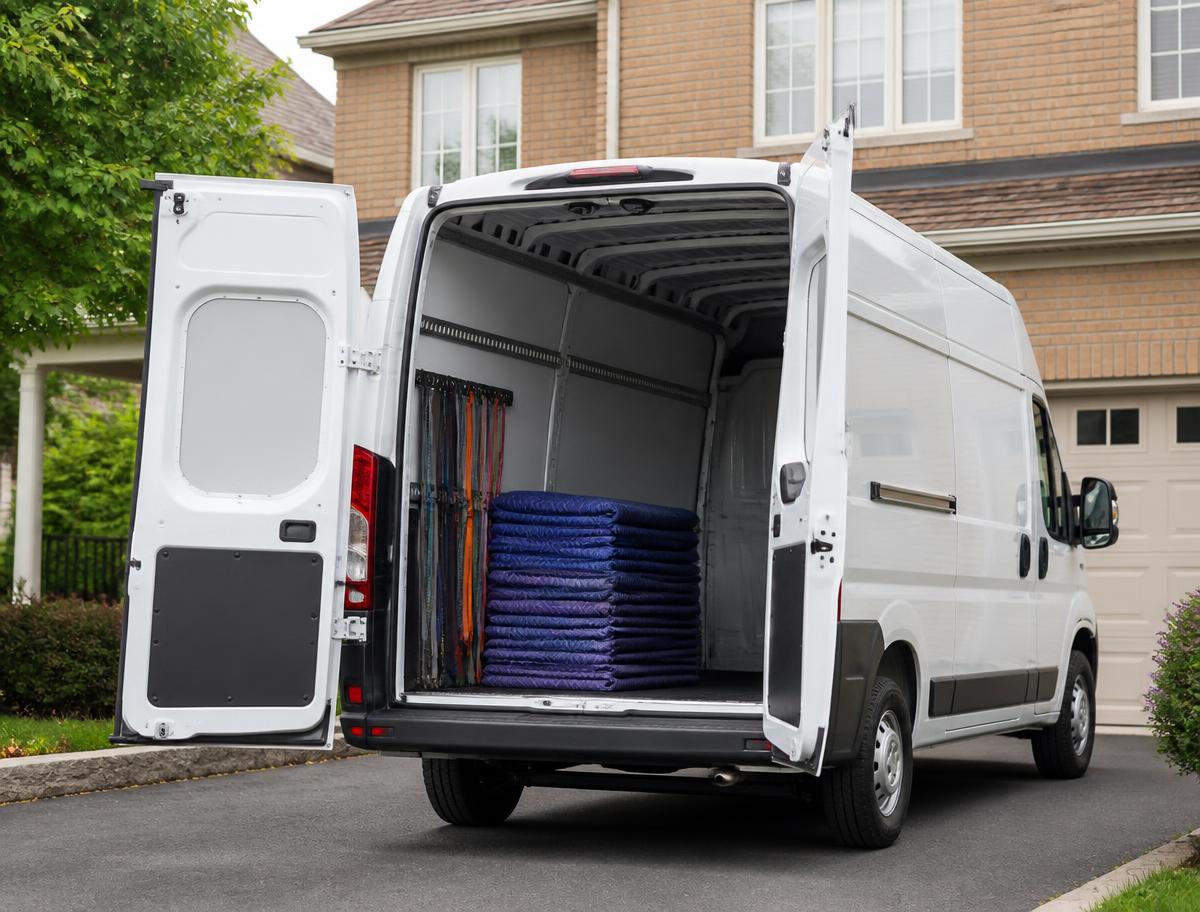
Not all cargo is created equal, and neither is the equipment used to move it. If you are shipping appliances, fitness equipment, or heavy furniture, a standard tailgate might not suffice. You need to ensure the carrier utilizes late-model trucks equipped with heavy-duty liftgates, specialized appliance dollies, and high-quality moving blankets. The interior of the trucks should be clean and outfitted with E-track systems to secure loads properly, preventing shifting during transit along the undulating backroads of the Frontenac Axis or the Thousand Islands region. Ask potential partners to describe their typical load-out and what steps they take to prevent cross-contamination between different clients' goods.
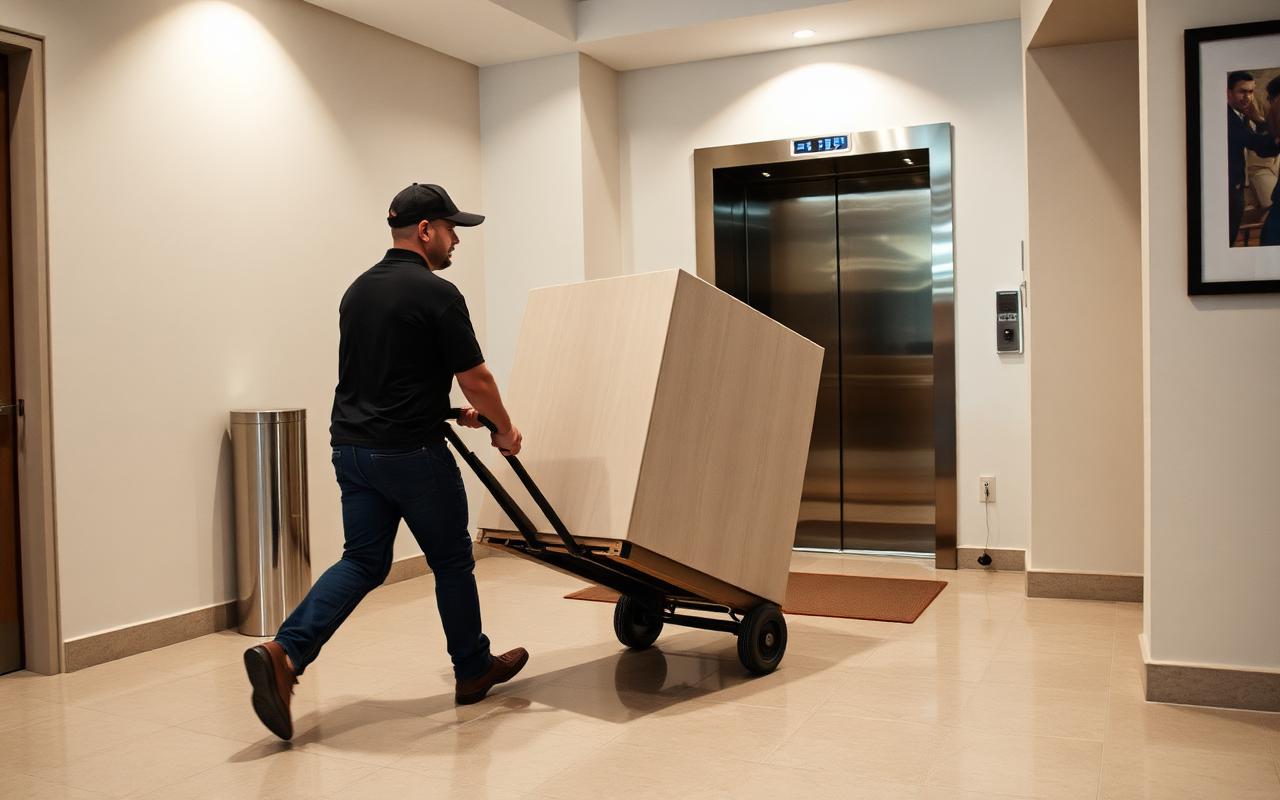
Furthermore, consider the physical challenges of Eastern Ontario homes. From the narrow basement stairs of historic Kingston limestone homes to the sprawling layouts of new builds in Quinte West, drivers must be equipped with the right tools for every scenario. This includes shoulder dollies for heavy lifting, floor runners to protect carpets, and a comprehensive tool kit for light assembly or door removal. If your product requires specific handling—such as keeping a refrigerator upright to protect the compressor or ensuring a mattress is never bent—these instructions must be part of the carrier’s standard operating procedure. A partner who treats your high-value goods like generic freight will inevitably lead to higher damage rates.
- Availability of 26-foot box trucks with tuck-away or rail-style liftgates.
- Provision of clean moving pads, shrink wrap, and corner protectors for every load.
- Use of specialized stair-climbing dollies for heavy appliances and safes.
- Inventory of tools for basic furniture assembly and door hinge removal.
- Regular maintenance schedules for vehicles to prevent roadside breakdowns.
Navigating Eastern Ontario’s Unique Geography and Weather
Geography plays a massive role in delivery success in this part of the province. Eastern Ontario is characterized by its diversity; a driver might start the morning in the urban grid of Ottawa and end the afternoon on a winding, unpaved road in the Madawaska Valley. A local carrier understands that 'last mile' in this region often means 'last ten miles' down a rural route. They know which bridges have weight restrictions and which residential areas in towns like Perth or Brockville are difficult for large trucks to navigate. This local knowledge results in more accurate time estimates and fewer instances of trucks getting stuck or being unable to reach a destination.
Weather is the other great variable. The snow belts off Lake Ontario can turn a routine run from Belleville to Cornwall into a multi-hour ordeal. A seasoned regional partner has a robust winter weather policy and the equipment to match, including winter-rated tires and experienced drivers who know how to handle ice and heavy slush. They also understand the importance of protecting the customer’s home from the salt, slush, and mud that drivers inevitably track in during an Ontario winter. Ask how they adjust their schedules during significant weather events and what their communication plan is for customers whose deliveries are delayed by road closures on the 401 or Highway 7.
Commercial Structures and the Cost of Quality
Understanding the pricing model is essential for maintaining your margins. Last mile delivery pricing in Eastern Ontario usually falls into three categories: per-stop rates, per-piece rates, or a zone-based model. A per-stop rate is often most predictable for high-density urban areas, while zone-based pricing accounts for the extra fuel and time required for rural outreaches. Be wary of 'flat-rate' quotes that seem too low; these often hide 'accessorial' charges that can inflate your invoice unexpectedly. Ask for a comprehensive fee schedule that outlines costs for stair carries, long-distance carries (where the truck cannot park near the door), assembly time, and re-delivery fees.
Beyond the base rate, you must evaluate the cost of failure. A cheaper carrier might save you a few dollars per stop, but if their damage rate is 5% higher than a premium provider, those savings are quickly wiped out by the cost of replacement units, return shipping, and lost customer lifetime value. Ask potential partners about their claims ratio and their process for resolving disputes. A professional carrier will have a clear, documented claims process with a defined timeline for resolution—usually within 7 to 14 business days. They should treat a damage claim not as an adversarial negotiation, but as a joint effort to make the customer whole as quickly as possible.
- Clear definitions of 'standard' vs. 'extra' labor (e.g., flight of stairs limits).
- Transparent fuel surcharge formulas based on weekly regional averages.
- Defined windows for claim filing and maximum settlement timelines.
- Policies regarding 'not-at-home' failed attempts and subsequent charges.
- Volume-based discounts for consistent daily or weekly lane commitments.
Scalability and Seasonal Peak Performance
The retail cycle in Canada is heavily weighted toward the fourth quarter, and Eastern Ontario is no exception. Between Black Friday and the New Year, delivery volumes can double or triple. You need a partner who can scale their operations to meet your peak demand without sacrificing the quality of service. Ask how they handle seasonal spikes: Do they bring in extra trucks? Do they hire temporary labor, and if so, how is that labor vetted? A partner who is already at maximum capacity in October will likely fail you in December. A truly scalable partner has the fleet flexibility and the administrative depth to handle the surge in both deliveries and customer inquiries.
Scalability also applies to your long-term growth. As your business expands from Belleville into the Ottawa valley or westward toward Peterborough, can your carrier grow with you? A partner with a broad terminal network and a diverse fleet can offer consistent service levels as your footprint increases. During your vetting process, ask for case studies or references from clients who have grown with them. You want a relationship that functions as a partnership, where the carrier provides proactive suggestions on how to optimize your routes and reduce costs as your volume increases, rather than just acting as a reactive service provider.
The Advantage of a Local Eastern Ontario Partner
There is a distinct advantage to choosing a carrier headquartered in the heart of the region, such as Belleville. A local carrier is deeply invested in the community and its reputation. They aren't just a logo on a truck; they are your neighbors. This proximity translates to greater responsiveness. If a priority shipment needs to go out at the last minute or a customer has a unique requirement, a local firm has the agility to make quick decisions without waiting for approval from a corporate head office in another province or country. They have established relationships with local businesses and an intimate knowledge of the regional infrastructure that national carriers often lack.
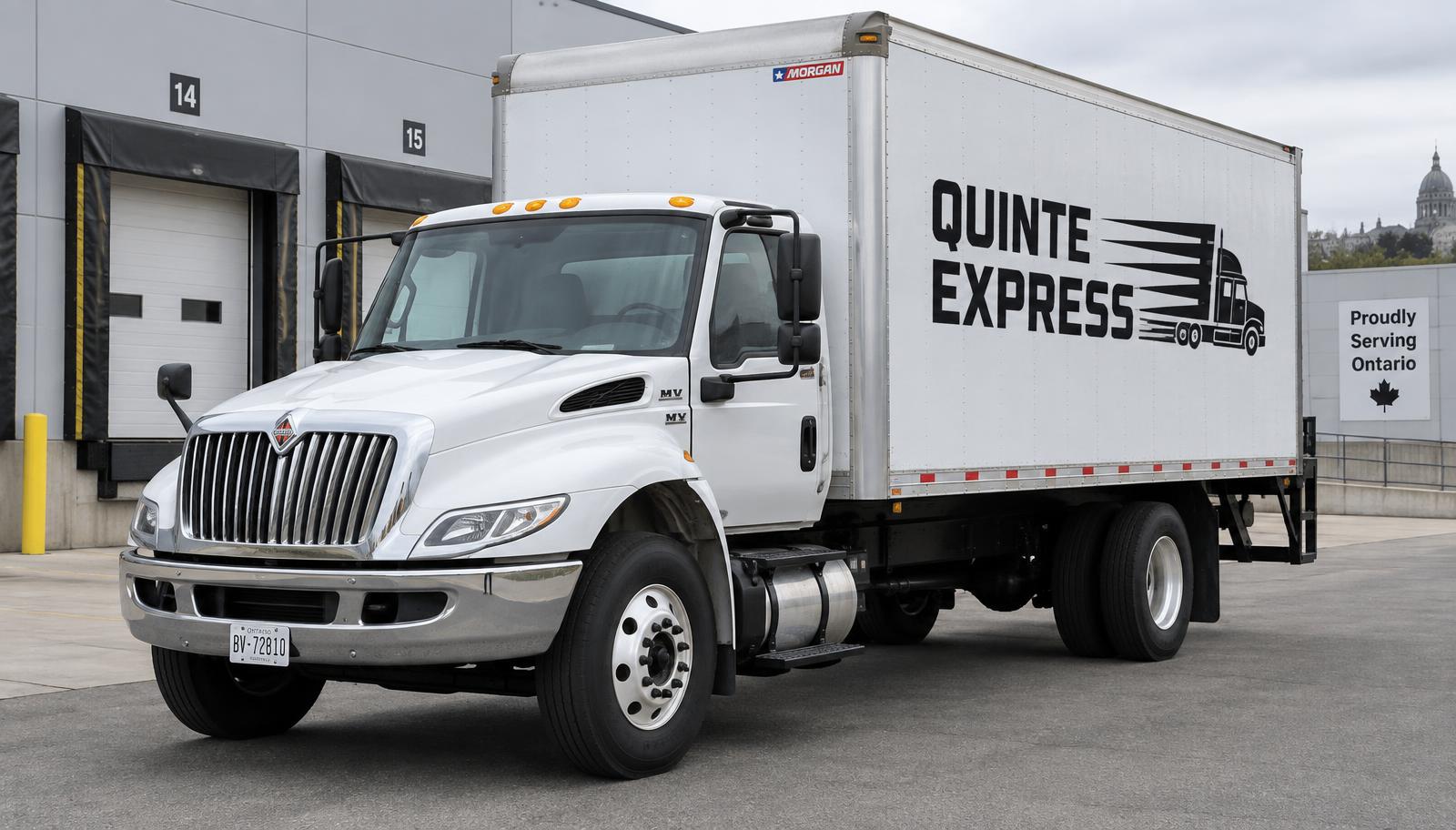
Quinte Express embodies this local advantage. Based in Belleville, we have spent years perfecting the art of last mile delivery across Eastern Ontario. We understand the nuances of serving Kingston, Trenton, Napanee, and the surrounding rural areas because we travel these roads every single day. Our commitment to white-glove service, professional driver conduct, and transparent communication ensures that your brand is protected from the warehouse to the living room. When you choose a local specialist, you are choosing a partner who knows that in Eastern Ontario, every delivery is an opportunity to build a stronger community. Contact us today at 613-968-0909 to discuss how we can streamline your last mile logistics and elevate your customer experience.
Frequently asked
- What is a CVOR and why does it matter for my delivery partner?
- The Commercial Vehicle Operator's Registration (CVOR) is Ontario's safety monitoring system for commercial vehicles. A carrier's CVOR rating reflects their history of inspections, accidents, and traffic violations. Choosing a partner with a strong CVOR rating minimizes your legal risk and ensures your goods are being transported by a safe, compliant fleet.
- How do you handle deliveries in apartment buildings with no elevators?
- Professional last mile carriers prepare for this by charging 'stair fees' for deliveries above a certain floor (usually the second). Crews are equipped with specialized harnesses and dollies to safely navigate narrow stairwells. It is crucial to communicate these obstacles during the booking process to ensure the right crew and equipment are dispatched.
- What happens if a product is damaged during the delivery process?
- A reputable carrier will document the damage immediately with photos and notes on the digital Proof of Delivery. You should then file a formal claim through their established process. Most high-quality partners aim to resolve these claims within two weeks, either through repair, replacement, or financial reimbursement depending on the coverage.
- Can you deliver to rural areas in Eastern Ontario during the winter?
- Yes, but it requires local expertise. A regional partner uses winter-equipped vehicles and experienced drivers who understand rural road maintenance schedules. While extreme weather may occasionally cause delays for safety reasons, a local carrier is better positioned to navigate these conditions than a national carrier unfamiliar with the area.
- What is 'White Glove' delivery versus 'Threshold' delivery?
- Threshold delivery means the item is placed just inside the front door or garage. White Glove delivery is a premium service that includes carrying the item to the room of choice, unboxing it, performing light assembly, and removing all packaging materials. White Glove is recommended for high-end furniture and large appliances.
Services in this article
More last mile guides
Book this service in Eastern Ontario
Quinte Express is locally owned in Belleville, Ontario — white glove, last mile, furniture, appliance and parcel delivery across Kingston, Trenton, Ottawa and all of Ontario.