Furniture
Getting a Sectional Up Narrow Stairs Without Wrecking the Walls
Master the diagonal measurement math and professional techniques required to navigate bulky sectionals through tight Ontario stairwells without damaging your drywall or furniture.
The Critical Math: Measuring the Diagonal Clearance
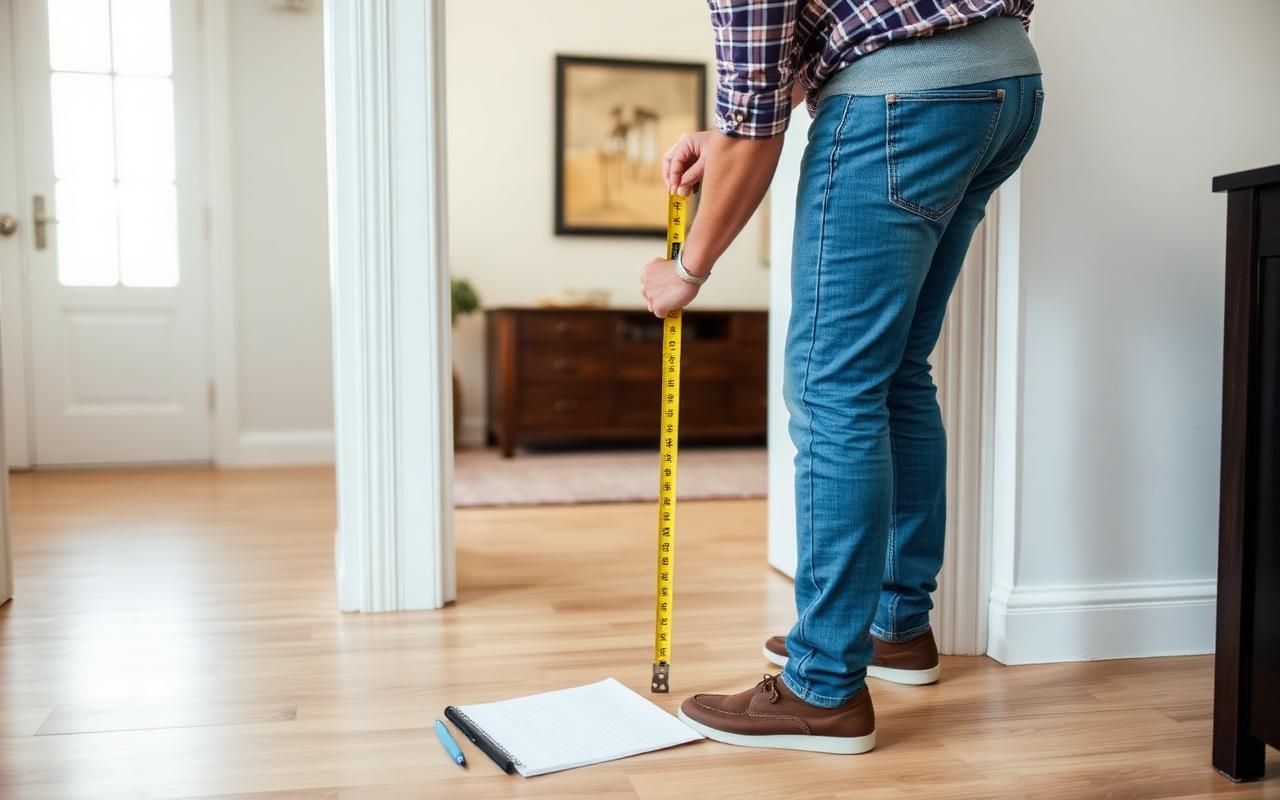
When homeowners attempt to move a large sectional, they often make the mistake of measuring only the height and width of the furniture against the height and width of the doorway. However, professional movers in Eastern Ontario know that furniture rarely travels through a tight space in a perfectly vertical or horizontal orientation. The most important metric is the diagonal depth of the sofa. To find this, measure from the top back of the frame to the bottom front corner. This measurement represents the narrowest 'slice' the sofa can provide when tilted at a 45-degree angle. If this diagonal measurement is smaller than your narrowest doorway or the clearance between your stair railing and the ceiling, you have a high probability of success.
Beyond the furniture itself, you must measure the 'arc' of the stairwell. In many older Belleville or Kingston homes, stairwells feature a low ceiling height that decreases as you ascend. You need to measure the distance from the nose of the stair tread to the ceiling directly above it at the tightest point of the turn. If your sectional is long—such as a three-seat component—you must also ensure the hallway leading into the stairs has enough 'swing room' to allow the piece to be stood on end. Without this vertical clearance, the piece will become wedged before the climb even begins, leading to potential structural damage to the drywall.
Consistency in measurement is the hallmark of a successful move. It is recommended to use a steel tape measure rather than a cloth one to avoid sagging, which can lead to inaccuracies of half an inch or more. In the world of tight stairwells, a half-inch is often the difference between a smooth delivery and a stuck sofa. Ensure you are measuring the actual frame of the sectional, not the removable cushions, as compressed foam can be misleading. By recording the maximum width, the diagonal depth, and the total length of each individual module, you provide the moving crew with the data they need to plan the physics of the lift before they even arrive at your doorstep.
- Measure the diagonal depth from the back-top corner to the front-bottom corner.
- Identify the lowest ceiling point in the stairwell, usually at the landing or turn.
- Check the width of the stairway at the narrowest point, including handrails.
- Measure the height and width of all entry doors on the path to the room.
- Account for the 'swing' space required to turn the piece into the stairwell entrance.
Strategic Disassembly: Buying Inches Where They Count
Modern sectionals are often designed with transport in mind, but they still require manual intervention to maximize clearance. The most immediate win is removing the legs or feet. While they may only seem like three or four inches of wood or plastic, that height is often exactly what prevents a sofa from clearing a standard door frame. Most legs are either threaded or secured with wood screws; removing them allows the flat base of the sofa to sit flush against the floor or a moving dolly, significantly lowering the center of gravity and reducing the overall height profile during the carry.
Another often overlooked strategy is the removal of the architectural elements of the house itself. Taking a door off its hinges can provide an additional 1.5 to 2 inches of clearance by removing the thickness of the door and the protrusion of the hinge pins. In tight Ontario heritage homes, this small adjustment is frequently the deciding factor. Furthermore, if the sectional has removable back cushions or even a removable back panel—common in many reclining or modular styles—these should be taken off and moved separately. Reducing the 'bulk' of the piece allows the movers to see their hand placement more clearly and prevents the fabric from snagging on door latches or trim.
For modular sectionals, the process is simpler but requires careful organization. Each component—the chaise, the corner unit, and the loveseat sections—should be disconnected and treated as an individual piece. Before moving, ensure all metal connecting brackets are either removed or taped over with painters' tape. These brackets are notorious for gouging walls and scratching hardwood floors during the tilting process. By breaking the sectional down to its smallest possible footprint, you reduce the physical strain on the moving crew and minimize the risk of the furniture becoming physically lodged in a switchback stairwell.
- Unbolt all legs and store them in a labeled bag taped to the underside.
- Pop door hinge pins to remove interior doors for extra horizontal clearance.
- Detach all loose cushions, pillows, and removable fabric covers.
- Unscrew and remove any protruding metal connecting hardware or brackets.
- Check if the backrest is on a rail system that allows for complete removal.
Protecting the Path: Walls, Floors, and Fabric
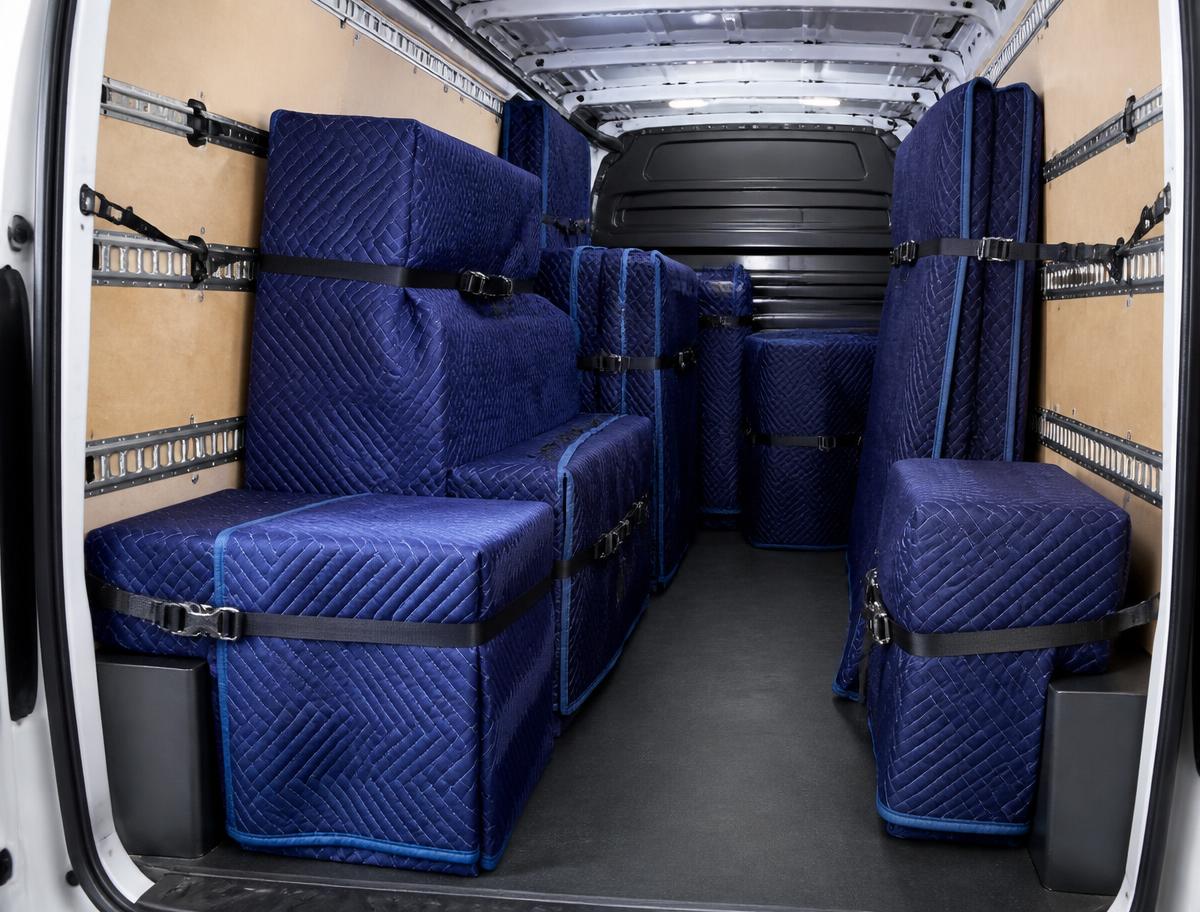
Moving heavy furniture through narrow spaces is a high-friction activity. Without proper protection, the abrasive surface of the sofa fabric can act like sandpaper against your paint, while the sharp corners of the wooden frame can easily puncture drywall. The first line of defense is a high-quality moving blanket. Professionals wrap the entire piece in these heavy quilted pads and secure them with stretch wrap. This not only protects the furniture from dirt and oils but also creates a smooth, slippery surface that allows the piece to 'glide' against walls if a light rub occurs, rather than catching and tearing the upholstery.
The home itself needs equal attention. In Eastern Ontario, where seasonal changes bring in mud, snow, or salt, floor runners are essential. Neoprene runners or adhesive plastic films protect carpets and hardwoods from the heavy foot traffic of a two-person crew. Corner guards should be applied to the most vulnerable parts of the stairwell, particularly the external corners of the drywall at the top and bottom of the flight. These simple plastic or cardboard shields absorb the impact of a bump, preventing the dreaded 'crushed corner' look that often plagues DIY furniture moves. A well-protected path reduces stress for both the homeowners and the movers.
Visibility is the final component of protection. When a large sectional is being carried up stairs, the person at the bottom often has a limited view of the ceiling, while the person at the top cannot see their feet. Clearing the path of all obstacles—including wall art, hanging light fixtures, and rugs—is mandatory. A single stray rug can cause a trip that results in a dropped sofa and significant property damage. By stripping the hallway and stairwell to their barest elements, you create a sterile environment where the movers can focus entirely on the geometry of the furniture and the safety of their movements.

Navigating the Switchback: The Art of the Turn
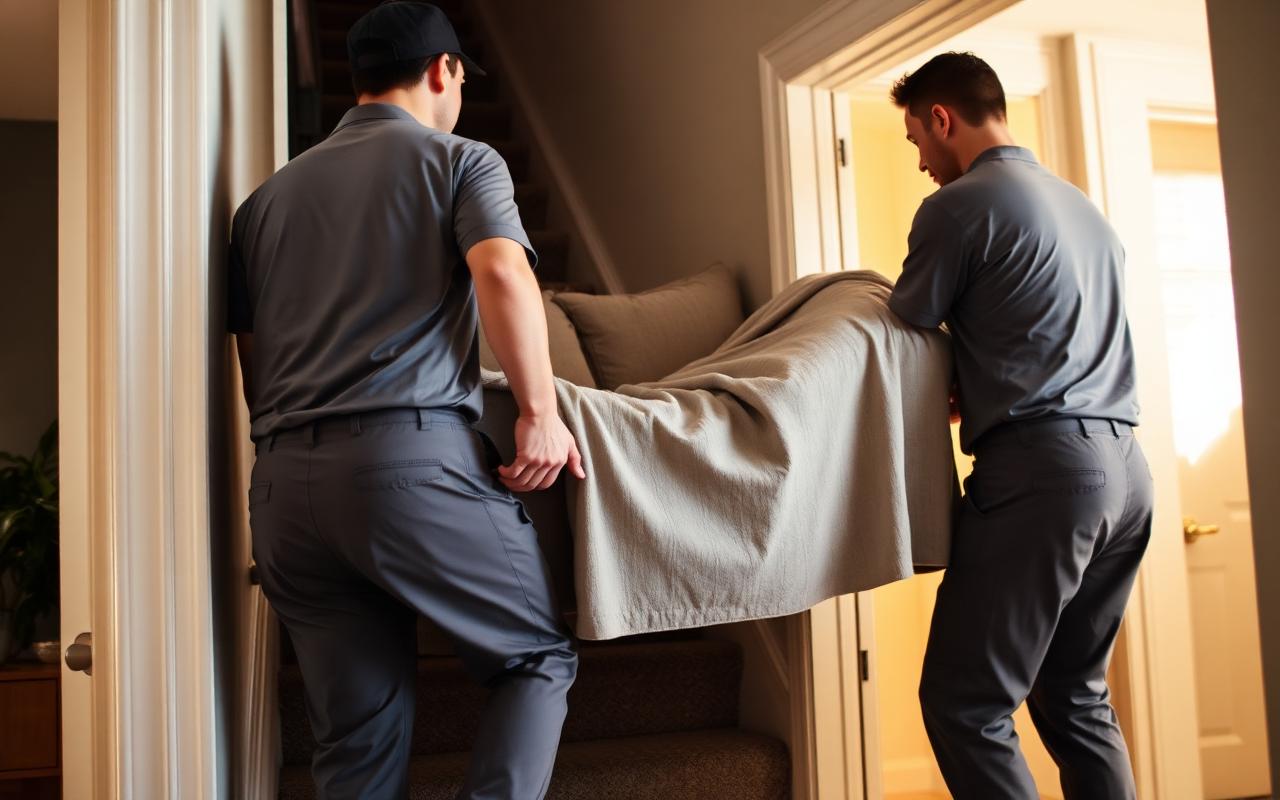
The switchback stairwell—a flight that goes up, hits a landing, and turns 180 degrees—is the natural enemy of the large sectional. The difficulty lies in the 'dead space' at the landing. If the landing is not at least as deep as the sofa is long, the piece must be stood vertically on its end to make the turn. This requires a ceiling height that exceeds the length of the sofa section. Professionals use a technique where the piece is rotated 'over the rail' if the layout allows, though this requires immense upper body strength and perfect synchronization between the two crew members to ensure the piece doesn't slip.
Timing and communication are vital during the turn. The mover at the bottom (the 'power' position) provides the lift, while the mover at the top (the 'navigator') guides the angle. There is often a moment where the sofa is perfectly balanced on a single corner while being rotated. This is the point of highest risk. Professional crews use rhythmic commands to ensure they are moving in unison. If the piece becomes wedged, the rule is to never force it forward. Instead, the crew will back it out, re-evaluate the angle, and perhaps shift the tilt by just a few degrees. Often, a 'taco' maneuver—where the soft parts of the sofa are slightly compressed—can gain the final inch needed to clear the banister.
In cases where the banister itself is the primary obstruction, temporary removal may be an option, though this is usually a last resort. Many modern banisters are bolted into the wall studs and can be unscrewed to provide several inches of extra width. However, this should only be done if the structural integrity of the stairs remains safe for the movers. If the turn is physically impossible due to the fixed dimensions of the walls and ceiling, the crew will identify this immediately. Knowing when to stop is just as important as knowing how to push, as forcing a piece can lead to structural damage to the home's framing.
Winter Logistics in Eastern Ontario
Moving large furniture in Ontario requires special consideration for the climate. Between November and March, the primary challenges are moisture and traction. A sectional moved through a snowy driveway can absorb water into the wooden frame or the fabric, leading to mold issues later if not properly dried. Professional crews prioritize 'dry transitions.' This means the truck is backed up as close as possible to the entry, and the piece remains wrapped in plastic stretch film until it is safely inside the climate-controlled environment of the home. This prevents snow or freezing rain from touching the upholstery during the few seconds it is exposed to the elements.
Traction is a significant safety concern for the movers. A two-person crew carrying a 200-pound sofa section up a flight of stairs cannot afford a slip. Salt and sand should be applied liberally to all exterior walkways, and the entry area should be equipped with heavy-duty mats to dry off boots. Inside, however, wet boots are a hazard on hardwood or tile stairs. Movers will often use indoor-only shoes or high-traction boot covers to ensure their grip on the stairs is absolute. In the cold, wood and plastic also become more brittle, so care must be taken not to knock furniture legs against frozen surfaces, which could cause them to snap or shatter.
Daylight hours are also shorter during the Ontario winter. Scheduling a move for mid-morning is ideal to ensure maximum visibility and to avoid the icy 'black ice' conditions that often form as temperatures drop in the late afternoon. If a move must happen in the evening, ensuring that the outdoor path is brightly lit with floodlights is a requirement for safety. Cold weather also makes the fabric and foam of the sectional stiffer, which can make it slightly harder to 'squeeze' through tight spots. Bringing the furniture into a warm room for thirty minutes to let the materials soften before attempting a difficult stairwell climb can actually make the process easier.
- Clear all snow and ice from the driveway and walkway at least two hours before arrival.
- Ensure the path is salted or sanded to provide maximum traction for the crew.
- Use plastic stretch wrap over moving blankets to create a waterproof barrier.
- Schedule the move between 10:00 AM and 2:00 PM for optimal light and temperature.
- Provide a dedicated space inside for movers to transition from outdoor to indoor footwear.
When the Stairs Fail: Hoisting and Alternative Entries
Sometimes, the geometry of a stairwell simply does not allow for a standard carry. When the diagonal depth of the sofa exceeds the clearance of the stairs, or a turn is too sharp for the frame's length, professional movers look for alternative entry points. The most common alternative is a balcony or a large second-story window. Hoisting involves using heavy-duty straps and pulleys (or sometimes a specialized lift) to raise the furniture from the exterior of the building. This requires a crew with specific experience in rigging and securing loads, as the wind and the weight of the piece can create significant leverage.
Hoisting is not without its risks and costs. It requires a clear vertical path free of power lines, trees, and obstructions. The window or balcony door must also be wide enough to accept the piece, often requiring the temporary removal of window sashes. In cities like Kingston or Belleville, where many heritage homes have large windows but impossibly narrow interior stairs, hoisting is a routine part of furniture delivery. It is a specialized skill that adds time to the job, but it is often the only way to get a modern, deep-seated sectional into a second-story living space without cutting the furniture in half.
If hoisting is not feasible, the final option is professional furniture disassembly. There are specialized services that will literally take the sofa apart—removing the upholstery and cutting the wooden frame—only to rebuild and re-upholster it once it is inside the room. This is a surgical process that, when done correctly, leaves no visible sign that the sofa was ever altered. While expensive, it is often preferred for high-end designer pieces that are otherwise impossible to move. A professional moving crew will be able to advise you if your piece has reached the 'point of no return' where standard moving techniques will no longer suffice.
The Costs and Logistics of Difficult Moves
Moving a sectional up a difficult stairwell is not a standard 'last mile' delivery; it is a specialized service that requires more time and manpower. The cost of such a move is driven by several factors, including the number of flights of stairs, the complexity of the turns, and the number of crew members required to safely manage the weight. Most professional moving companies in Ontario will charge a 'stair fee' or an hourly rate that reflects the increased physical risk and the time-intensive nature of maneuvering bulky items. If a move requires a three-person crew instead of two to ensure safety on a steep incline, the labor cost will adjust accordingly.
Insurance and liability also play a role in the pricing. A reputable mover carries cargo insurance and general liability insurance to protect against damage to both the furniture and the home. When you hire a professional, part of the cost covers this peace of mind. Attempting to save money by hiring 'two guys and a truck' without insurance can lead to a disastrous financial outcome if a heavy sectional falls through a drywall partition or causes a structural injury. Always ask for a written estimate that includes the specific details of the stairwell navigate to ensure there are no surprises on moving day.
Preparation can help control costs. If you have already removed the doors, taken off the furniture legs, and cleared the path before the movers arrive, you reduce the 'billable hours' spent on-site. Professional crews appreciate a prepared environment, as it allows them to focus on the technical execution of the move. Additionally, providing accurate photos and measurements of the stairwell in advance allows the dispatch team to send the right equipment—such as straps, dollies, and padding—on the first trip, avoiding the need for a second visit or a specialized equipment rental.
- Labor hours: The primary cost driver, influenced by the difficulty of the maneuver.
- Stair fees: Many companies charge per flight after the first level.
- Specialty equipment: Fees for hoists, ramps, or specialized rigging straps.
- Manpower: The need for a third person to spot or assist in heavy lifts.
- Insurance coverage: Ensuring the piece and the property are protected during the transit.
Professionalism Matters: Why Expert Crews Win
At the end of the day, moving a sectional through a tight space is about physics and experience. A professional crew has seen hundreds of different stairwell configurations and knows instinctively which angles will work and which will lead to a jam. They bring specialized tools, such as 'hump straps' or forearm forklifts, which allow them to distribute the weight of the furniture more effectively, reducing the risk of dropping the piece. This technical proficiency is what prevents the 'squeaking' sound of fabric against drywall that usually precedes a permanent mark or tear.
Beyond the physical act of moving, professional movers provide a level of problem-solving that DIY attempts lack. If a piece doesn't fit the first way it's tried, a pro will analyze the pivot points and try a 'roll' or a 'pitch' that a novice wouldn't consider. They also understand the structural limits of furniture; they know where the frame is strongest for gripping and where it is weakest (like the center of a long rail), ensuring that the sofa isn't damaged by the move itself. This expertise is particularly valuable for heavy, high-quality furniture made of solid wood and dense foam.
Quinte Express is a locally owned trucking company based in Belleville, Ontario, running white glove, last mile, furniture, appliance, and parcel work across Eastern Ontario and province-wide. Our crews are trained to handle the most challenging deliveries, from narrow downtown Kingston apartments to sprawling rural estates. We pride ourselves on clear communication and careful handling, ensuring your furniture arrives in your room of choice exactly as it left the showroom. For a professional quote on your next difficult furniture move, call us today at 613-968-0909.
Frequently asked
- What is the most important measurement for a sofa move?
- The diagonal depth is the most critical measurement. You calculate this by measuring from the top of the sofa back to the front-bottom corner of the frame. This represents the narrowest clearance needed when the sofa is tilted to pass through doorways and tight stairwell turns.
- Can all sectionals be taken apart?
- Most modern sectionals are modular, meaning they break down into individual seats or corner units. However, the individual frames themselves are usually solid. If a single module is still too large, you may need a specialized 'sofa doctor' service to disassemble the actual wooden frame and upholstery.
- Should I remove my banister to make more room?
- Only if it is designed to be removable. Many handrails can be unscrewed from their wall brackets to gain 3-5 inches of width. However, never remove a banister that provides essential structural support for the movers during the climb unless you have a safe alternative for their balance.
- How do movers protect my walls during a tight squeeze?
- Movers use heavy-duty quilted blankets secured with stretch wrap to create a padded, low-friction surface. They also use floor runners to protect the stairs and cardboard or plastic corner guards on the drywall to prevent gouges and paint chips during the rotation of the furniture.
Services in this article
More furniture guides
Book this service in Eastern Ontario
Quinte Express is locally owned in Belleville, Ontario — white glove, last mile, furniture, appliance and parcel delivery across Kingston, Trenton, Ottawa and all of Ontario.