Furniture
Measure Before You Buy: The Delivery Check Most Shoppers Skip
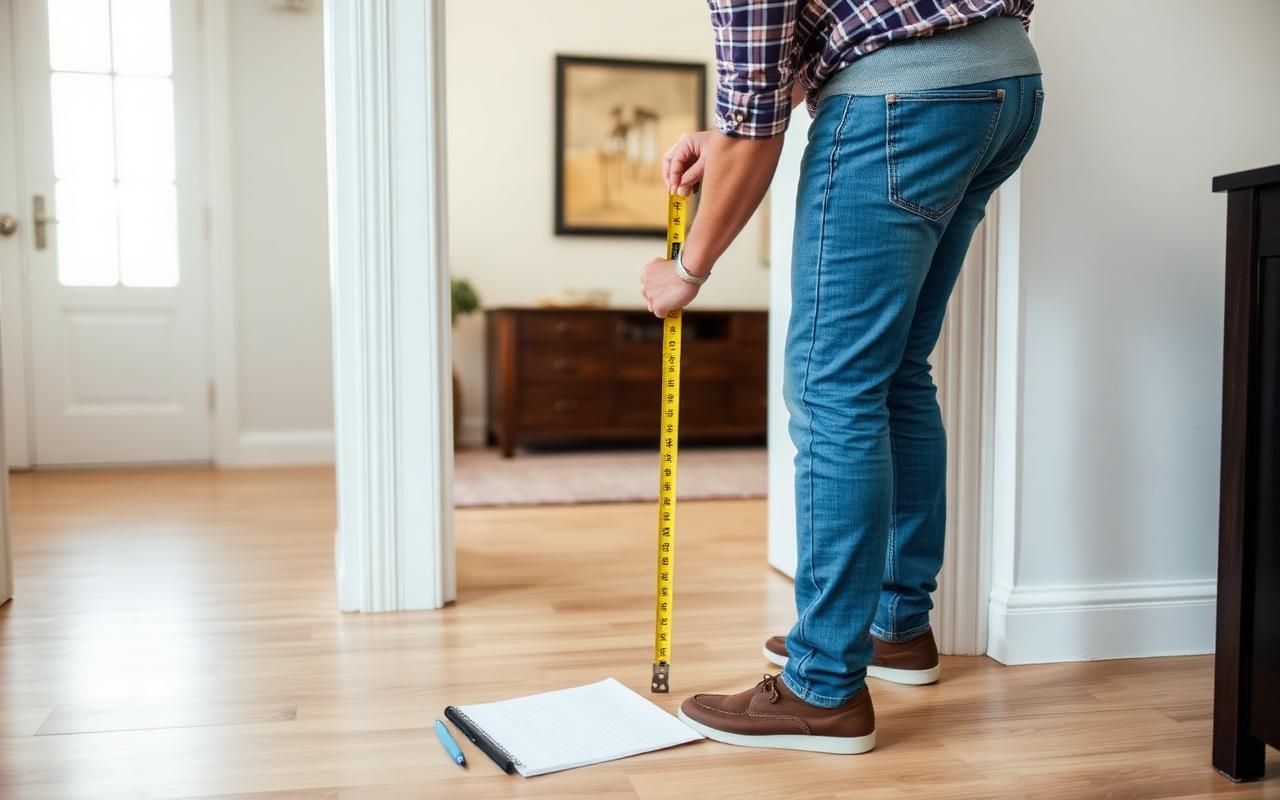
Five crucial measurements taken with a tape and a phone that prevent a returned sofa and an expensive restocking fee on delivery day.
The Critical Importance of Pre-Purchase Measurements
Buying new furniture for your Belleville home is an exciting milestone, whether you are furnishing a new build or updating a long-time residence. However, the excitement of choosing the perfect fabric and silhouette can quickly turn into a logistical nightmare if the piece doesn't fit through your front door. Many shoppers assume that because a room is large enough to hold a sectional, the pathway to that room is equally accommodating. This is rarely the case, particularly in older homes or modern apartments with tight corridors. Professional movers often encounter 'fit-failures' where a piece is only an inch too wide, resulting in expensive restocking fees and damaged drywall.
To ensure a seamless delivery, you must treat your home's entry points like a puzzle. The dimensions provided by furniture retailers are just the beginning of the story. You need to account for the geometry of movement, which includes the swing of doors, the height of light fixtures, and the radius of every turn. By spending thirty minutes with a measuring tape before you finalize your purchase, you save yourself hours of frustration and potential financial loss. At Quinte Express, we have seen that the most successful deliveries are those where the homeowner has physically mapped out the path from the curb to the final destination.
Measuring isn't just about the furniture itself; it is about understanding the limitations of your architecture. Door frames, baseboards, and low-hanging chandeliers are all obstacles that do not appear on a furniture spec sheet. In Ontario, where seasonal changes might mean managing slushy entryway mats or bulky door seals, these small details become even more significant. A measurement that seems 'close enough' in the summer might be impossible in the winter when the air is damp and wood slightly swells or when thick floor protection is required for the delivery team.
- Locate a high-quality steel measuring tape that won't sag over long distances.
- Identify every single door, hallway, and corner between the driveway and the room.
- Consider the presence of non-removable features like radiators or built-in shelving.
- Check for overhead obstructions like ceiling fans or low-clearance soffits.
- Determine if the furniture legs are removable or fixed to the frame.
Mastering the Doorway Clearance Dimensions
The most common mistake when measuring a doorway is measuring the outer frame or the width from wall to wall. To get an accurate reading for furniture passage, you must measure the narrowest point, which is typically between the door stops—the thin strips of wood the door rests against when closed. Furthermore, you must account for the thickness of the door itself when it is in the open position. Unless a door can be removed from its hinges, it will eat up one to two inches of your clearance width. This 'net clearance' is the only number that matters when the delivery crew is trying to slide a heavy sideboard through the frame.
Height is equally important as width. While most standard doors are roughly 80 inches tall, older homes in the Quinte region may have shorter entrances, or modern luxury homes might have arched entries that limit the effective clearance for tall items like armoires or bookcases. Don't forget to look down at the floor; thresholds and transitions between different flooring types can add a half-inch of height that might wedge a tall piece of furniture against the top of the frame. If you are close on measurements, check if the door hinges are the type that allow the door to swing fully clear of the opening.
If a doorway seems too tight, investigate if the door can be easily popped off its hinges. This is a common tactic for professional delivery teams, but it requires advance notice and the right tools. If the door has a hydraulic closer or complex security sensors, removing it might not be an option. Always communicate these details to your delivery provider ahead of time so they can bring the appropriate screwdrivers or Allen keys. Knowing the exact clearance down to the quarter-inch ensures that the white-glove team doesn't have to force a piece, which protects both the furniture's structural integrity and your home’s trim work.
Navigating Hallways and 90-Degree Turns
A wide front door is useless if it leads immediately into a narrow hallway with a sharp turn. This is where most delivery mishaps occur. You must measure the width of your hallway at its narrowest point, often where there is a radiator, a coat rack, or a protruding baseboard. If the furniture piece is longer than the hallway is wide, the delivery team will have to 'turn' the piece, which requires a significant amount of clearance. The 'diagonal' of the hallway turn is the limiting factor here. If you have a 36-inch wide sofa and a 36-inch wide hallway, but the hallway turns at a right angle into a room, the sofa might not be able to make the pivot.
To calculate if a long piece like a three-cushion sofa can make a turn, you need to look at the ceiling height in the corner. Sometimes, the only way to get a long piece around a tight corner is to stand it up vertically. If your ceilings are only 8 feet high and your sofa is 95 inches long, you cannot 'end-up' the sofa to make the turn. This vertical clearance is often overlooked until the delivery team is already in the hallway. Mapping this out with a piece of string or a long cardboard scrap can help visualize whether the turn is physically possible without gouging the drywall.
Always be mindful of wall-mounted items. Paintings, mirrors, and sconces should be removed from the hallway before the delivery team arrives. Even if the hallway is wide enough, these items represent snag hazards. In narrow Ontario bungalows, every inch counts. If the hallway has a low-hanging bulkhead or HVAC ducting, measure the clearance from the floor to the lowest point of that obstruction. A sectional might fit the width but get wedged against the ceiling, forcing an embarrassing and costly return to the warehouse.
- Measure hallway width including the projection of baseboards and chair rails.
- Calculate the 'turn radius' at every junction or room entry.
- Check ceiling height at the specific point where a piece might need to be stood up.
- Identify any banisters or handrails that might reduce the effective width.
- Ensure all wall decor is removed to prevent accidental damage.

The Stairwell Struggle: Width and Landing Depth
Moving furniture between floors adds a layer of complexity that requires precise calculations. Stairwells are notoriously tight, and the presence of handrails can reduce your usable width by three to five inches. When measuring your stairs, take a measurement from the wall to the handrail, and another from the handrail to the opposite banister if applicable. Do not just measure the width of the wooden treads. Additionally, look for 'head-knockers'—the sloping ceiling above the stairs. The vertical clearance at the lowest point of the stair incline is often the bottleneck for tall dressers or mattresses.
The landing is the most dangerous spot for a 'fit-failure.' If your stairs have a landing that turns 90 or 180 degrees, the depth and width of that landing must be greater than the smallest dimension of your furniture. If you are moving a queen-sized box spring, for example, it cannot bend. If the landing is too shallow to allow the box spring to rotate, it will never reach the second floor. This is why many modern homes require 'split' box springs. Before ordering any large bedroom sets, ensure your stairwell landings can accommodate the rotation of a six-foot-long object.
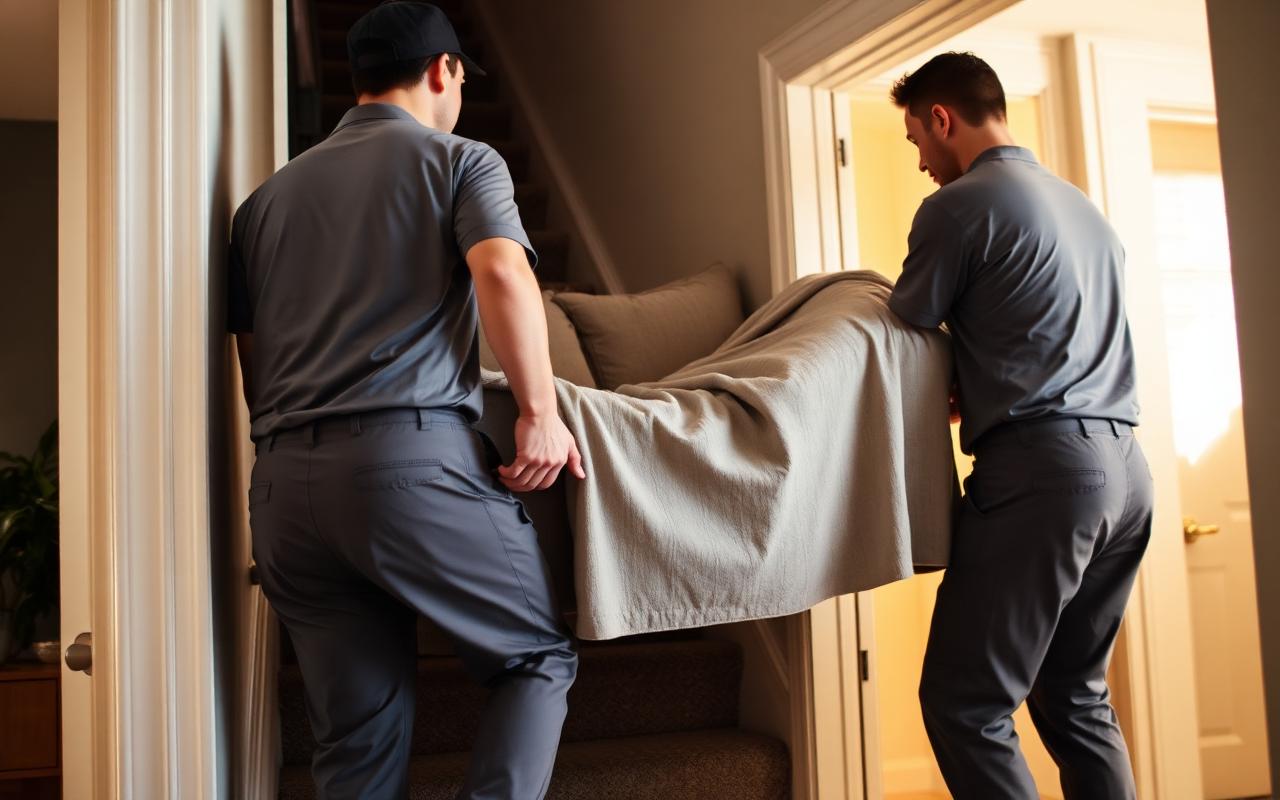
Professional movers in Belleville often suggest measuring the 'diagonal clearance' of the stairwell—the distance from the corner of a step to the ceiling directly above it at a 90-degree angle. This tells you how much 'swing room' the movers have as they lift the piece. If the furniture is heavy, remember that the movers need space for their own bodies alongside or behind the piece. A tight fit for the furniture becomes impossible if there is no room for the people carrying it. If your stairs are exceptionally narrow, consider if the furniture can be disassembled or if an alternative entry, like a balcony, is available.
Elevator Logistics for Apartment and Condo Dwellers
If you live in a multi-story building or a modern condo in downtown Belleville, the elevator is your lifeline—and your biggest constraint. You must measure three things: the door opening, the interior cabin dimensions, and the diagonal distance from the bottom front corner to the top back corner. Many modern sofas are too long to sit flat on an elevator floor and must be stood up. If the diagonal height of the elevator interior is less than the length of your sofa, it won't fit. You should also check if your building has a dedicated service elevator, which usually offers more height and protective padding.
Timing is just as important as measurements when it comes to elevators. Most buildings require you to book the elevator in advance for large deliveries. This often involves a refundable deposit and a specific two-hour window. If your furniture delivery is delayed due to traffic on the 401 and you miss your window, the building manager may not allow the delivery to proceed. This results in a 'failed delivery' charge from the trucking company. Always coordinate with your building management to ensure the elevator is padded and locked out for your exclusive use during the arrival window.
Don't forget the path from the loading dock to the elevator. Sometimes the elevator itself is large, but the hallway leading to it has a low-clearance fire door or a sharp turn. Check the height of the parking garage entry if the delivery truck needs to pull inside. A standard box truck requires at least 12 to 14 feet of clearance. If the truck can't get into the loading bay, the movers will have to 'long-carry' the furniture, which may result in additional labor fees. Knowing these details ahead of time allows the delivery company to send the right size vehicle and crew.
- Measure the elevator door width and height specifically.
- Measure the interior cabin height, width, and depth.
- Find the interior diagonal measurement (floor corner to opposite ceiling corner).
- Confirm the weight capacity of the elevator for heavy appliances or stone tables.
- Verify building rules for furniture delivery hours and padding requirements.
Understanding Diagonal Depth: The Secret Metric
Most furniture websites list the standard width, height, and depth. While these are useful for seeing if a sofa fits in your living room, they don't tell you if it fits through your door. The 'diagonal depth' is the measurement that determines if a piece can be 'threaded' through a doorway by tilting it at an angle. To find this, you measure from the top back of the frame to the bottom front of the frame. This is the narrowest profile the piece can present. If the diagonal depth is smaller than your door width, the piece can be tilted and moved through, even if the standard depth is too large.
When you are at the furniture showroom, don't rely on the salesperson's guess. Bring your own tape measure and physically find the diagonal depth. Ask if the legs can be removed, as this can often reduce the height or depth by 3 to 6 inches, making a 'no-fit' into a 'fit.' For upholstery, remember that cushions can be compressed slightly, but the wooden or metal frame cannot. Always measure to the solid parts of the frame, not the fluff of the pillow. If you are buying online, call the manufacturer's customer service line to ask for the 'minimum door width required' for that specific model.
Why does this matter? Because a sofa that is 40 inches deep might seem impossible for a 34-inch door. However, if that sofa has a low back and the diagonal depth is only 32 inches, it will slide through with ease once tilted. This geometric trick is the primary tool used by professional movers to navigate tight spaces. By knowing this number in advance, you can shop with confidence, knowing exactly which oversized pieces are actually viable for your specific home layout. It eliminates the guesswork and the 'hope for the best' strategy that often leads to delivery failure.
Preparing the Destination Room and Mapping the Footprint
Once you know the furniture can get into the house, you must ensure it actually fits the intended space. A common error is misjudging the scale of a piece in a large, high-ceilinged showroom compared to a cozy residential room. The best way to visualize this is by using painter's tape to outline the exact dimensions of the furniture on your floor. Leave this tape down for a few days to see how it affects traffic flow. Can you still open the balcony door? Is there enough room to walk between the new coffee table and the TV stand? This physical map prevents 'buyer's remorse' regarding the size.
Consider the 'clearance zone' around the furniture as well. For reclining chairs or sleeper sofas, you need to measure the footprint in both the closed and fully extended positions. For dining tables, you need at least 24 to 36 inches of space behind the chairs to allow people to sit and move comfortably. In Ontario homes with floor vents or baseboard heaters, ensure the new furniture won't block the airflow, which can lead to heating inefficiencies or damage to the furniture's underside. Take note of the location of power outlets if you are buying motorized furniture or lamps.
Finally, check the 'path of arrival' within the room itself. If the furniture has to be flipped or rotated inside the room to reach its final corner, ensure there is enough 'swing space.' This is especially important for large sectionals that come in multiple pieces. You might have a 12-foot wall for the sofa, but if you have other furniture already in the room, the movers might not have the 15 feet of open floor space needed to snap the sectional pieces together. Clearing the room of smaller items before the delivery team arrives makes their job faster and safer.
- Use painter's tape to mark the furniture's footprint on the floor.
- Measure the distance from the tape to the nearest walls and walkways.
- Check for clearance of swinging doors and cabinet drawers.
- Locate floor vents and electrical outlets to avoid obstruction.
- Ensure there is enough 'assembly space' for multi-piece units.
Seasonal Considerations and Local Belleville Logistics
In the Quinte region, weather is a significant factor in delivery success. During the winter months, snow and ice can make driveways treacherous and increase the risk of slips. Ensure your driveway and walkways are salted and shoveled at least two feet wider than the furniture itself. Movers need stable footing to carry heavy loads. If your home has hardwood floors, have old towels or floor runners ready to protect the wood from salt and slush. While professional teams like Quinte Express use floor runners, extreme weather days may require extra precautions to keep your home pristine.
Humidity also plays a role. Wood expands and contracts with the seasons. A tight-fitting wooden armoire that was measured in the dry heat of winter might be a fraction of an inch larger during a humid July day in Belleville. When measurements are tight (within a quarter-inch), these seasonal fluctuations matter. Furthermore, consider the time of day. In the winter, daylight is limited; late-afternoon deliveries mean the team will be working in the dark. Ensure your outdoor porch lights are functional and bright so the crew can see the path clearly and avoid tripping hazards.
Locally, traffic patterns in Belleville and the surrounding areas like Trenton or Prince Edward County can impact delivery windows. Construction on the Norris Whitney Bridge or delays on Highway 2 can shift arrival times. Choosing a local delivery partner who understands these regional quirks is beneficial. A local company will know how to navigate the narrow historic streets of East Hill or the gravel lanes of the County, ensuring they bring the right equipment for the terrain. Communication is key: if your street has parking restrictions or is a one-way, tell your delivery provider during the quoting process.
The Financial Impact of Measurement Mistakes
What happens if the furniture doesn't fit? Most people don't realize the cost implications until it's too late. When a delivery is refused because the item cannot fit into the home, the customer is typically responsible for a 'failed delivery fee.' On top of that, the furniture retailer will often charge a restocking fee, which can range from 15% to 35% of the item's purchase price. For a $3,000 sectional, that mistake could cost you over $1,000 with nothing to show for it. These fees are not meant to be punitive; they cover the cost of the two-way transport, the labor, and the fact that the item is no longer 'factory fresh.'
Beyond the direct fees, there is the cost of damage. When a piece is forced through a space that is too small, the risk of tearing upholstery, scratching leather, or gouging drywall increases exponentially. Even if the piece eventually fits, you may be left with a repair bill for your home or a brand-new sofa with a permanent scuff. Insurance claims for such damage can be complicated if the homeowner insisted the movers 'just try it' despite the movers' professional warning that it wouldn't fit. Clear measurements provide a objective 'go or no-go' signal that protects everyone's wallet.
To avoid these costs, be proactive. If you are unsure about a measurement, document it with photos and videos. Professional delivery companies can often assess a path via a few clear smartphone photos and tell you if a piece is likely to fit. This 'pre-delivery consultation' is a service that saves thousands of dollars in aggregate for smart shoppers. At Quinte Express, we value this transparency because it ensures our crews remain efficient and our customers stay happy. A successful delivery is one that was planned long before the truck pulled out of the warehouse.
- Be aware of restocking fees, typically 15-35% of the retail price.
- Factor in the cost of a 'failed delivery' charge from the carrier.
- Consider potential repair costs for drywall or trim if a fit is forced.
- Avoid the 'reschedule fee' by ensuring someone is home to accept the delivery.
- Ask about 'White Glove' upgrade costs for complicated setups.

Conclusion: Partnering for a Stress-Free Delivery
In the end, the secret to a stress-free furniture delivery isn't luck; it's preparation. By taking the five critical measurements—doorways, hallways, stairs, elevators, and room footprints—you eliminate the variables that cause delivery day disasters. Remember to always look for the diagonal depth and consider the vertical height when navigating turns. These small steps ensure that the beautiful piece you saw in the showroom looks just as good in your living room without the added drama of a failed attempt or damaged walls.
Quinte Express is your locally owned partner for white-glove, last-mile delivery across Belleville, Eastern Ontario, and beyond. We specialize in handling furniture, appliances, and large parcels with the care they deserve. Our team understands the local architecture and the challenges of Ontario weather, making us the preferred choice for homeowners who want their delivery done right the first time. If you have questions about an upcoming furniture purchase or need a professional quote for transport, we are here to help. Reach out to our team today to ensure your next home upgrade is a complete success. Call us at 613-968-0909 for a quote or to discuss your specific delivery needs.
Frequently asked
- What is 'Diagonal Depth' and why is it important?
- Diagonal depth is the measurement from the top back corner of a piece to the bottom front edge. It is crucial because it represents the narrowest profile of a piece when tilted. Often, a sofa that is too wide to fit through a door standing flat can be angled through if its diagonal depth is less than the doorway width.
- Do I really need to remove my door from the hinges?
- Not always, but it provides an extra 1.5 to 2 inches of clearance. If your measurement is within an inch of the furniture's width, removing the door is a smart precaution. Always check if the door has complex hardware like closers or sensors before attempting removal, or ask our delivery team for assistance.
- What should I do if my stairwell is too narrow for a mattress?
- For tight stairwells, consider purchasing a 'split' box spring or a 'bed-in-a-box' style mattress that can be moved while compressed. If the mattress is already expanded, it can often be slightly flexed, but rigid items like traditional box springs or wooden bed frames require full clearance of the narrowest point of the stairs.
- How can I protect my floors during a winter delivery?
- We recommend laying down heavy-duty floor runners or old blankets from the entry to the destination room. Ensure the path is clear of salt and slush before the movers enter. While our white-glove team takes precautions, having extra protection on hand ensures your hardwood or carpets remain clean regardless of Ontario's unpredictable weather.
Services in this article
More furniture guides
Book this service in Belleville
Quinte Express is locally owned in Belleville, Ontario — white glove, last mile, furniture, appliance and parcel delivery across Kingston, Trenton, Ottawa and all of Ontario.