Freight
Lift Gate vs Dock Delivery: Which One Does Your Shipment Need?
If there is no loading dock or forklift at the delivery address, you require a lift gate to safely unload heavy freight and avoid costly redelivery fees.
Defining the Fundamentals: What is a Lift Gate?
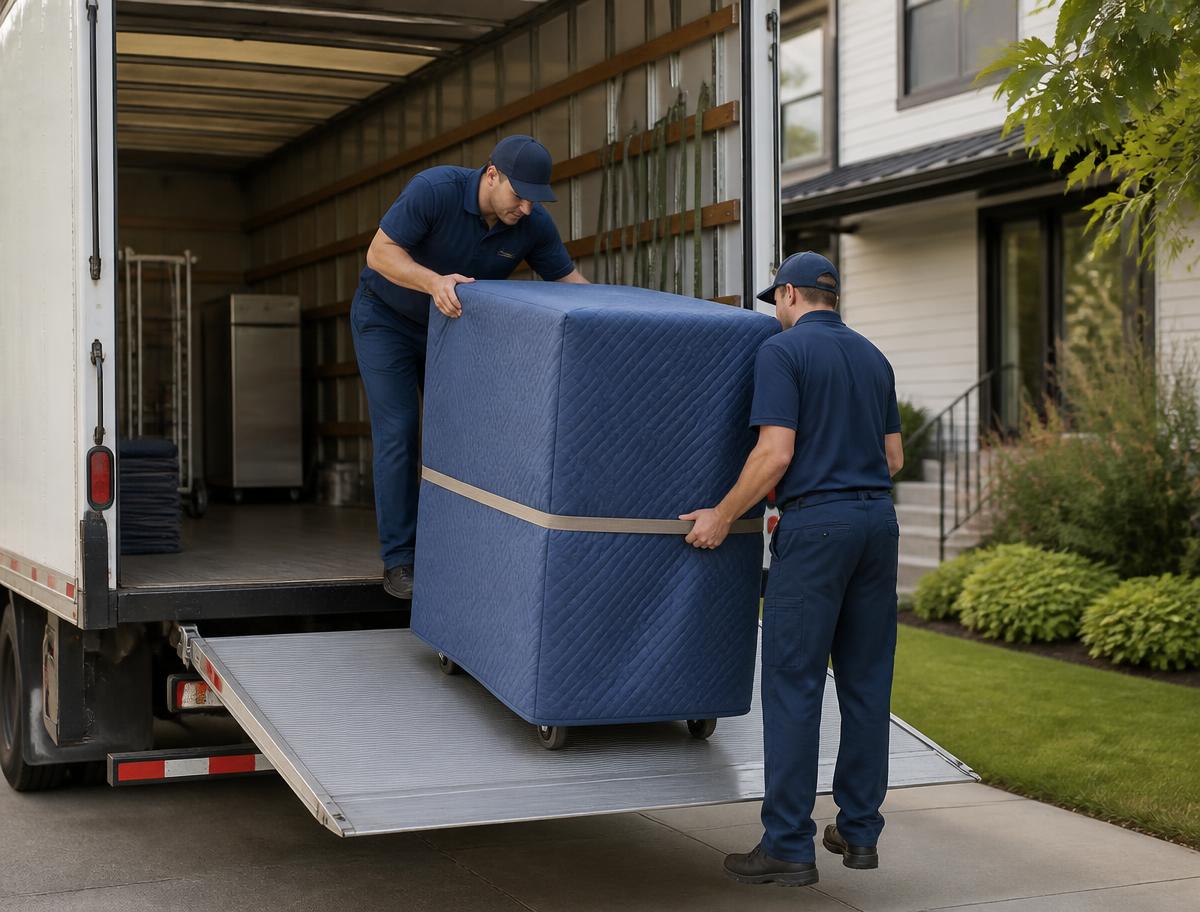
A lift gate is a specialized hydraulic or mechanical platform permanently installed on the rear of a shipping truck, designed to bridge the vertical gap between the truck’s cargo deck and the ground level. In the world of logistics, most freight trailers sit approximately 48 to 52 inches above the asphalt. Without a raised loading dock or a forklift to reach into that trailer, a heavy pallet is essentially trapped in the truck. The lift gate acts as an elevator, safely lowering weights ranging from 500 to 3,000 pounds so that a driver can wheel the shipment onto the pavement using a pallet jack.
For shippers in Eastern Ontario, understanding this equipment is vital because it determines the type of vehicle dispatched for your cargo. Not every truck in a carrier's fleet is equipped with this technology. Standard 53-foot long-haul trailers often lack them to maximize weight capacity for highway travel, whereas 'straight trucks' or 'five-tons' typically feature them as standard equipment. When you request a lift gate service, you are essentially reserving a specific type of asset and a driver trained to operate that hydraulic system safely in various conditions, ensuring that heavy items don't require manual lifting by the receiver.
Choosing this service is not just a matter of convenience; it is a primary safety requirement. Modern workplace safety regulations in Ontario prohibit drivers from 'hand-bombing' or manually offloading items that exceed specific weight thresholds, usually around 70 kilograms. Attempting to slide a heavy crate off the back of a truck without a gate is a recipe for catastrophic property damage or severe personal injury. By utilizing a hydraulic platform, the transition from the high-altitude truck bed to the flat ground is controlled, steady, and significantly less likely to result in a damaged product or a workplace safety claim.
The Mechanics of Dock Delivery and High-Volume Receiving
Dock delivery represents the industrial standard for shipping and receiving. A loading dock is a recessed bay in a building that allows a truck to back in so that the trailer bed sits flush with the interior floor of the warehouse. This creates a seamless horizontal surface, allowing forklifts or manual pallet jacks to drive directly into the trailer, pick up a load, and drive it back into the facility. This method is the fastest way to unload freight, as it eliminates the need for vertical transitions and allows for the processing of multiple pallets in mere minutes rather than the extended time required for individual lift gate cycles.
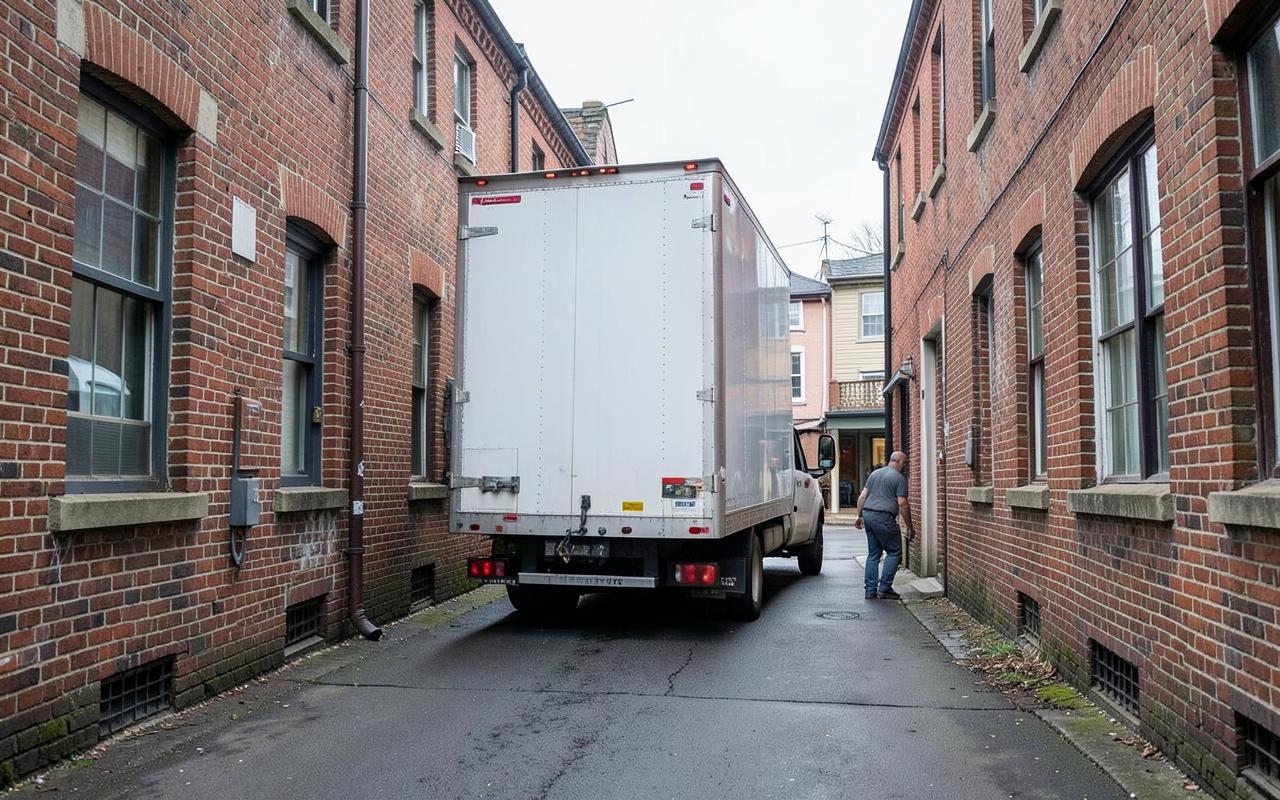
When a facility claims to have a 'dock,' it implies more than just a large door. It signifies that the physical architecture of the building can accommodate the height of a standard semi-trailer. However, shippers must be wary of 'limited access' docks that might be too shallow for long trailers or situated in tight alleys where a 53-foot truck cannot maneuver. In many older industrial areas of Belleville, Kingston, or Brockville, docks were built for shorter trucks of a bygone era. If the dock is not compatible with modern trailer heights, or if there is no dock leveler to bridge the small gaps, a lift gate might still be necessary even if a dock exists.
It is also important to distinguish between having a dock and having the personnel to manage it. A dock delivery assumes that the receiving party has the equipment, such as a forklift or a motorized pallet jack, and a certified operator ready at the time of arrival. If a truck arrives at a dock but the forklift is out of service or the operator is at lunch, the delivery may be stalled. Logistics coordinators must ensure that the 'dock delivery' designation is backed by both physical infrastructure and active operational readiness to avoid detention fees or delivery failures.
- Standard dock height: 48 to 52 inches from the ground.
- Requires a dock leveler or bridge plate for smooth transitions.
- Best suited for high-volume, palletized industrial freight.
- Eliminates the need for specialized hydraulic truck equipment.
- Requires adequate 'swing room' for large tractor-trailers.
Residential Deliveries: Why Lift Gates are Mandatory
If you are shipping to a home, a home-based business, or a residential complex in Ontario, a lift gate is mandatory 100% of the time. Residential areas lack the industrial infrastructure required for standard freight unloading. There are no raised platforms, and homeowners rarely have a forklift parked in the driveway. Even if a shipment is relatively light, such as a large piece of furniture or a crate of landscaping materials, the height of the truck deck makes it impossible for a driver to safely hand the item down to a person standing on the ground.
Furthermore, residential streets often present logistical hurdles that require the smaller, lift-gate-equipped straight trucks rather than large semi-trailers. Low-hanging tree branches, tight cul-de-sacs, and weight-restricted residential roads mean that a carrier must plan the entire route around a specific vehicle type. When you book a residential delivery, the 'lift gate' and 'residential' accessorial charges are typically bundled because one necessitates the other. Failing to disclose that a delivery address is a residence is one of the most common causes of freight delays and unexpected billing adjustments in the industry.
During an Ontario winter, residential deliveries become even more complex. A lift gate must be operated on a flat, stable surface. If a driveway is covered in ice or deep snow, the driver may be unable to safely deploy the gate or roll a pallet jack across the pavement. Residents should ensure that the delivery area is salted and cleared of snow to at least a six-foot width. This preparation ensures that once the hydraulic platform lowers the freight to the ground, the driver can actually maneuver it to the garage or curb as requested without the pallet getting stuck in a snowbank.
Small Commercial Locations and The 'No-Dock' Dilemma
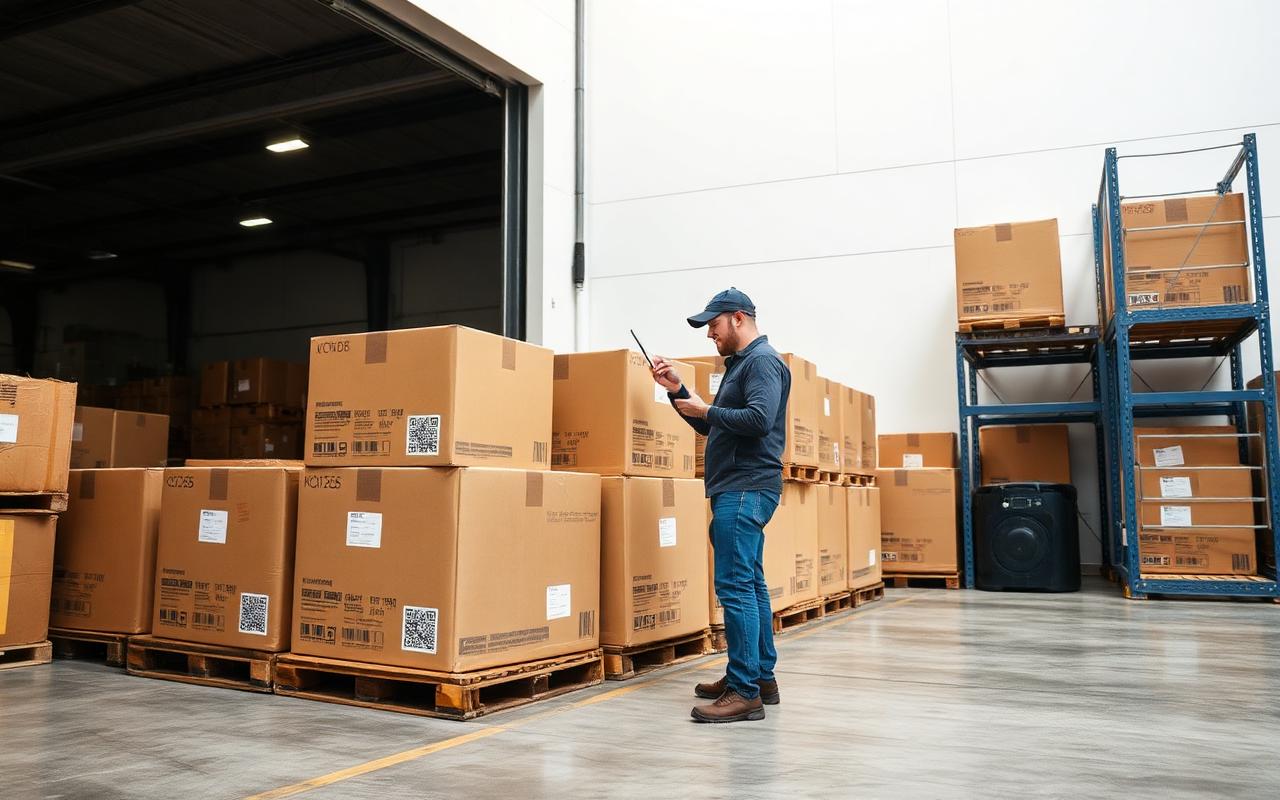
Many small businesses operate out of storefronts, strip malls, or converted offices that do not feature a loading dock. Locations like medical clinics, law offices, and downtown retail boutiques often receive freight that is too heavy for a standard courier van but lack the facilities for a traditional freight truck. In these scenarios, the truck must park at the curb or in a parking lot, and the lift gate serves as the essential bridge to get the goods to street level. From there, the driver uses a pallet jack to move the items across the sidewalk and through the front door.
Shippers often make the mistake of assuming that because a business is 'commercial,' it automatically qualifies for dock-level delivery prices. This is not the case. The classification is based on the physical unloading capability, not the zoning of the property. If your business requires the truck to have its own unloading mechanism, you must specify a lift gate. This is particularly relevant for heavy equipment deliveries, such as commercial ovens for restaurants or printers for architectural firms, where the value and fragility of the item require the stable, level transition that only a hydraulic gate provides.
Before scheduling, measure your doorways. A lift gate can get the pallet to the ground, and a pallet jack can move it to your door, but if the pallet is 48 inches wide and your front door is only 36 inches wide, the delivery will stall at the threshold. Most drivers provide 'curbside' or 'threshold' delivery, meaning they are not responsible for uncrating the item or moving it through tight interior spaces. Knowing the dimensions of your entry point and ensuring the freight is packed on a pallet that fits those dimensions is a critical step that saves hours of frustration and potential damage.
- Retail storefronts in downtown Kingston or Belleville.
- Medical offices receiving heavy diagnostic equipment.
- Schools and churches without dedicated receiving bays.
- Construction sites where a forklift has not yet arrived.
- Auto shops receiving engines or heavy transmissions.
The Hidden Costs of Incorrect Equipment Selection
The most expensive mistake in freight shipping is failing to request a lift gate when one is needed. When a truck arrives at a location and the driver realizes the freight cannot be unloaded safely, the shipment is 'refused' due to inadequate equipment. The truck then returns to the carrier's terminal. You will be billed for the initial delivery attempt, a storage fee for the time the freight sits at the terminal, and a redelivery fee to bring it back out on a truck that actually has a lift gate. These combined fees often exceed the original cost of the shipping itself.
Beyond the monetary penalties, there is the cost of time. A missed delivery can set a project back by days. For construction sites in Eastern Ontario, a delay in receiving essential materials can mean paying a crew to stand around with nothing to do. In the medical field, a delayed equipment delivery can mean cancelled patient appointments. By being proactive and confirming the unloading capabilities of your receiver, you eliminate the risk of these cascading delays. It is always better to pay for a lift gate service you 'might' need than to pay for two deliveries because you skipped it.
Carriers use a 'limited access' or 'lift gate' fee to offset the cost of the specialized equipment and the additional time the driver spends at the stop. Operating a hydraulic gate and navigating a pallet jack across a non-industrial surface takes significantly longer than backing into a dock and having a forklift operator whisk the pallet away. Understanding that you are paying for both the specialized hardware and the driver's additional labor helps contextualize the service fee as a necessary component of last-mile logistics.
Navigating Ontario’s Seasonal Challenges with Freight
Shipping in Eastern Ontario requires a specialized approach due to our extreme seasonal variations. During the spring thaw, many secondary roads are subject to 'half-load' restrictions to prevent road damage. This may limit the size of the truck that can reach your location, making smaller lift-gate-equipped vehicles the only viable option. Similarly, in the depths of winter, hydraulic fluids in lift gates can become sluggish in sub-zero temperatures. Experienced local carriers like Quinte Express maintain their equipment to handle these conditions, but it adds a layer of complexity to every stop.
Prepping your site for a winter delivery is non-negotiable if you want a successful lift gate drop. The hydraulic platform needs a clear, level area of pavement to land on. If there is a build-up of ice, the gate might not sit flush, causing the pallet jack to get stuck or the pallet to tip as it transitions off the gate. Furthermore, salt and slush can make the metal surface of the lift gate incredibly slippery. Shippers should ensure their receiving area is clear of snow, well-salted, and free of frozen ruts that could catch the small wheels of a pallet jack.
Wind is another factor often overlooked. A large pallet of light but bulky items—like insulation or empty plastic containers—can act as a sail when it is raised or lowered on a lift gate. In high-wind areas near Lake Ontario, drivers must use extreme caution. If conditions are too hazardous, the driver may exercise their right to refuse the delivery for safety reasons. Being aware of the weather forecast and communicating with your carrier about local site conditions can prevent accidents and ensure that your freight arrives in the same condition it left the warehouse.
- Clear snow to a width of at least 6-8 feet for pallet clearance.
- Ensure the landing zone is flat; gates cannot safely level on steep slopes.
- Be mindful of half-load road restrictions from March to May.
- Prepare for slower hydraulic operation during extreme cold snaps.
- Ensure outdoor lighting is functional for late afternoon winter deliveries.

Weight Limits and Cargo Dimensions for Lift Gates
Every lift gate has a maximum weight capacity, typically ranging between 1,500 and 3,000 pounds. While this sounds like a lot, it is easy to exceed when shipping heavy industrial parts, stone, or liquid containers. If your pallet exceeds the gate's rated capacity, the hydraulic system will fail to lift or lower it, or worse, the safety valves will trigger and lock the gate in place. Always provide an accurate weight for your shipment during the quoting process so the carrier can ensure the truck dispatched is rated for your specific load.
Dimensions are just as critical as weight. A standard lift gate platform is usually about 48 to 60 inches deep and 80 to 90 inches wide. If you are shipping an over-sized crate that is 8 feet long, it will hang off the edge of the platform, creating a dangerous center-of-gravity issue. Items that are too long for a standard gate may require a 'tuck-away' gate with an extra-large platform or, in some cases, can only be unloaded via a forklift. Don't assume that because a truck has a lift gate, it can handle any size of freight you throw at it.
Height is the final dimension to consider. A lift-gate truck (straight truck) usually has a lower interior ceiling than a full-sized 53-foot trailer. If your pallet is stacked 90 inches high, it might fit in a van trailer but not in the lift-gate truck assigned for local delivery. This leads to 'trans-loading' issues where the freight has to be broken down and repalletized at the terminal. To avoid this, keep your pallet heights under 78 inches whenever a lift gate is required at the final destination.
Packing and Crating for a Safe Hydraulic Descent
The way you pack your freight determines how well it survives a lift gate transition. When a pallet is lowered, it experiences slight vibrations and a change in angle as the truck's suspension reacts to the shifting weight. If the load is top-heavy or loosely shrink-wrapped, it can shift during the descent. We recommend using high-quality stretch wrap—at least 60-gauge—and wrapping it tightly around the base of the pallet to ensure the cargo and the wood move as a single unit. For very heavy items, steel or plastic strapping is highly recommended.
Avoid using damaged pallets. The small wheels of a pallet jack need a solid, intact bottom board to roll over. If the pallet is splintered or missing boards, the jack can get stuck, often while the freight is halfway off the lift gate. This creates a high-risk situation for the driver and your cargo. Spending a few extra dollars on a high-quality, heat-treated pallet (especially if shipping internationally or to sensitive sites) is a small price to pay for the security of your goods during the most vulnerable part of their journey.
Labeling also plays a role in the unloading process. Clearly mark the 'center of gravity' on heavy machinery and indicate which side is the 'front' for directional offloading. If the driver knows where the weight is concentrated, they can position the pallet on the lift gate platform more strategically to ensure a level descent. This transparency reduces the physical strain on the equipment and provides an extra layer of safety for everyone involved in the delivery process.
- Use a minimum of 3-5 layers of industrial-grade shrink wrap.
- Secure heavy machinery with ratcheting straps or steel banding.
- Ensure the pallet is in good repair with no broken bottom slats.
- Keep the center of gravity as low as possible.
- Mark fragile items clearly to ensure gentle hydraulic handling.
Checklist: Preparing for Your Delivery Arrival
Preparation is the key to a seamless delivery experience. Before the truck arrives, you should have a clear path from the street to the final drop-off point. This means moving parked cars, clearing away debris, and ensuring that no low-hanging wires or basketball hoops obstruct the truck's path. Drivers are often on a tight schedule, and having to wait 20 minutes for a customer to move a vehicle can result in detention charges. A little bit of foresight goes a long way in maintaining a good relationship with your carrier.
Communication is the final piece of the puzzle. Ensure that the phone number provided on the Bill of Lading (BOL) is for someone who will actually be on-site and answer the call. Drivers will often call 15-30 minutes prior to arrival to ensure someone is there to sign for the freight. If the driver cannot reach anyone, they may move on to their next stop to avoid falling behind schedule. This results in the dreaded 'delivery failure' notification and the associated fees for redelivery.
Finally, inspect the freight before the driver leaves. Once the lift gate has lowered the item and it is moved to your threshold, take a moment to check for visible damage. If you notice a hole in the box or a broken pallet, note it clearly on the Proof of Delivery (POD) before signing. This protects your right to file an insurance claim later. If you sign 'clear,' you are acknowledging that the freight arrived in perfect condition, making it very difficult to recover losses for damage discovered after the truck has driven away.

Conclusion: Choosing the Right Partner for Ontario Freight
Navigating the choice between lift gate and dock delivery doesn't have to be complicated, but it does require attention to detail. By accurately assessing your receiving site's capabilities and communicating those needs to your carrier, you ensure a safe, efficient, and cost-effective shipping process. Whether you are a large manufacturer in Cornwall or a small boutique in Prince Edward County, knowing how your freight will get off the truck is just as important as knowing how it gets on.
Quinte Express is your local expert in Eastern Ontario logistics. We specialize in the 'difficult' deliveries—the ones that require specialized equipment, local knowledge of rural routes, and a commitment to customer service. From white-glove furniture delivery to heavy industrial freight, our fleet is equipped to handle the unique challenges of the Ontario landscape. Let us take the guesswork out of your next shipment.
Ready to schedule your next delivery or need a quote for specialized lift gate service? Our team is standing by to help you navigate the complexities of freight shipping. Contact Quinte Express today at 613-968-0909 to discuss your specific needs and experience the difference of a carrier that truly knows Eastern Ontario.
Frequently asked
- Can a driver help me move the pallet inside my house or garage?
- Standard lift gate service is 'curbside' or 'threshold' delivery. This means the driver will lower the freight and move it to the nearest flat, paved surface, such as a driveway or garage opening. They are not insured to move items inside a residence, up stairs, or through narrow interior hallways due to liability risks.
- What happens if I didn't order a lift gate but I actually need one?
- The driver will likely be unable to complete the delivery. The freight will be returned to the local terminal, and you will be responsible for a redelivery fee and the lift gate accessorial charge. It is much more cost-effective to request the service upfront during the initial booking process.
- Is there a weight limit for how much a lift gate can carry?
- Yes, most standard lift gates have a capacity between 1,500 and 2,500 pounds. Some heavy-duty trucks can handle up to 3,000 pounds. If your pallet is heavier than the gate's capacity, you will need to arrange for a forklift at the delivery site to safely remove the freight from the truck.
- Are there extra fees for residential deliveries even if I don't need a lift gate?
- Yes. Residential deliveries incur a 'residential accessorial' fee because they require smaller trucks, navigate through tighter streets, and take more time to coordinate than industrial dock stops. Even if you have a forklift at home, the residential surcharge usually still applies due to the logistics involved.
Services in this article
Book this service in Eastern Ontario
Quinte Express is locally owned in Belleville, Ontario — white glove, last mile, furniture, appliance and parcel delivery across Kingston, Trenton, Ottawa and all of Ontario.