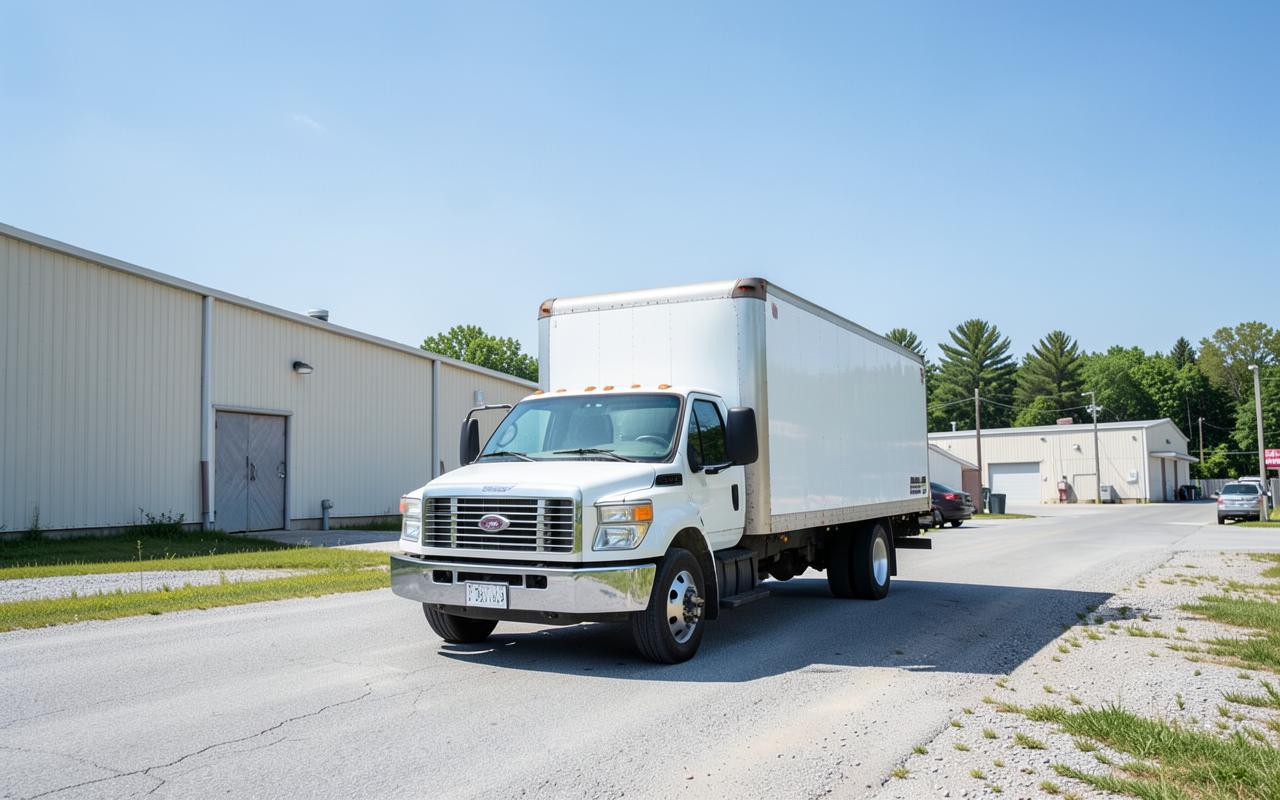
Commercial
Office Moves and Business Relocations in Belleville
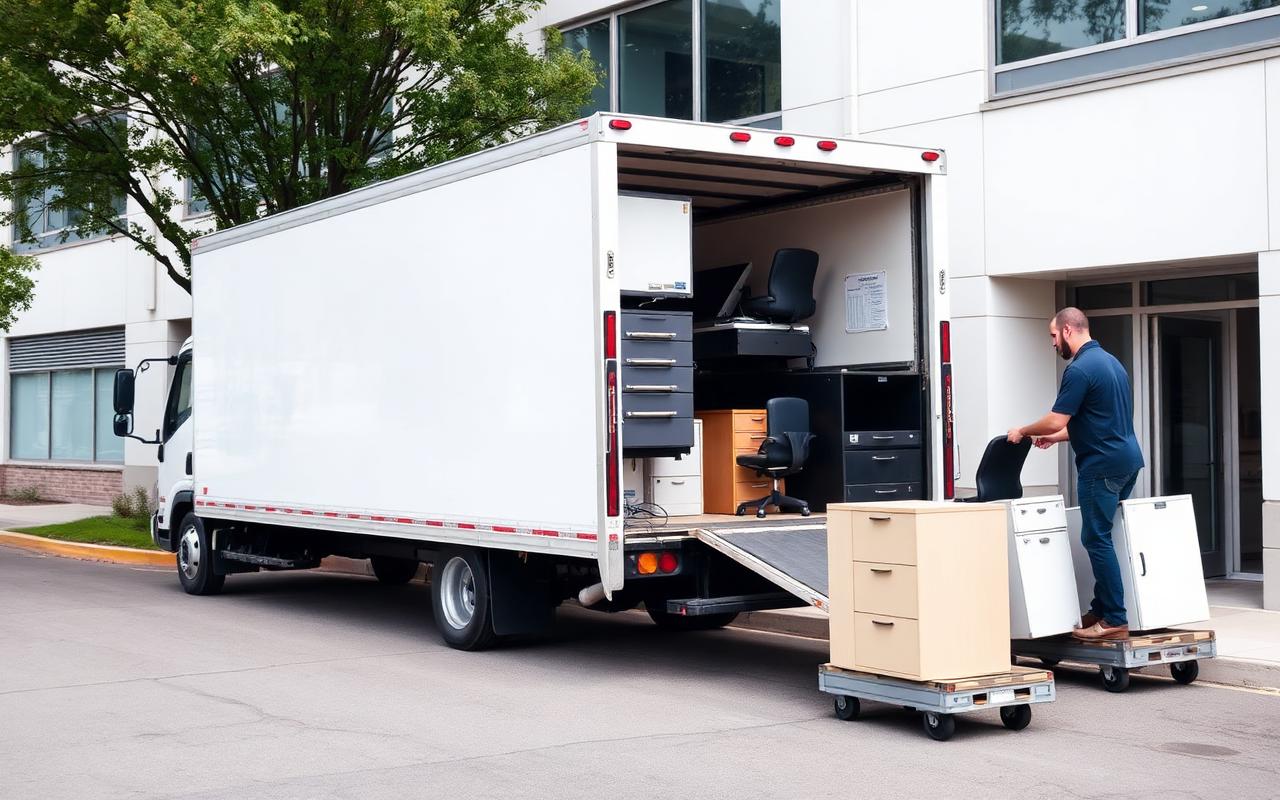
Minimize downtime and maximize productivity during your commercial relocation with strategic planning, expert IT handling, and a white-glove approach to Belleville office logistics.
The Strategic Advantage of After-Hours Relocation
In the commercial landscape of Belleville, time is the most expensive commodity. A midday move during the work week might seem convenient for scheduling, but the hidden costs of operational downtime, staff interruption, and traffic congestion near the downtown core can be astronomical. By scheduling a relocation for Friday evenings or over a weekend, businesses ensure that their Friday afternoon 'business as usual' transitions into a fully functional Monday morning setup. This approach allows the moving crew to operate without the constraints of shared elevator usage, busy pedestrian corridors, or the logistical nightmare of finding parking for large trucks on Front Street during peak retail hours.
Beyond just avoiding the crowds, after-hours moves offer a psychological benefit to your workforce. Employees can finish their work week at their old desks and return to a fresh, organized environment, which significantly reduces the stress associated with corporate transitions. From a technical perspective, evening moves allow IT departments to perform necessary server shutdowns and network migrations during standard maintenance windows, preventing any loss of service for clients who expect 24/7 digital availability. The investment in evening or weekend labor rates is almost always offset by the preservation of a full day of billable hours for your entire staff.
Furthermore, loading dock access in Belleville’s commercial buildings is often easier to secure during off-peak times. Many property managers require dedicated elevator bookings for large-scale moves to ensure that other tenants are not inconvenienced. By choosing a timeframe outside the 9-to-5 window, you gain exclusive access to these critical resources, which speeds up the loading and unloading process. This efficiency reduces the total billable hours for the moving crew, creating a leaner, faster, and more controlled relocation experience that respects both the budget and the business schedule.
- Schedule moves for Friday at 6:00 PM to maximize the weekend buffer.
- Confirm exclusive elevator access with building management two weeks prior.
- Alert local traffic authorities if loading requires blocking secondary lanes.
- Notify neighboring businesses to ensure no shared access points are obstructed.
- Plan for building security to be present for late-night access requirements.
Precision Inventory and Destination-Based Labeling
One of the most common failures in commercial relocation is a lack of organizational clarity at the destination. Traditionally, boxes are labeled with their origin, such as 'Marketing Room.' However, this leads to chaos when the crew arrives at a new facility with a different layout. The most effective strategy is a destination-coded system. Every piece of equipment, every box, and every ergonomic chair should be assigned a specific number or color code that corresponds to a master floor plan posted at the new office entrance. This allows the moving team to bypass the lobby entirely and deliver assets directly to the workstation where they will be used.
This level of precision requires a pre-move audit where every desk is mapped. For example, 'Station A-14' in the new floor plan should have a corresponding sticker on the desk, the monitor, the CPU, and the specific box of personal items belonging to that employee. By using high-visibility, color-coded stickers—perhaps blue for the sales wing, green for administration, and red for the server room—movers can instantly identify the general zone for every item they offload from the truck. This eliminates the 'double-handling' of goods, which is a major driver of fatigue and accidental damage during long moving days.
When planning this system, consider the logistics of Belleville's diverse commercial spaces, which range from modern glass offices to repurposed historic buildings with unique floor plans. If your new space includes multiple floors, labels should prominently feature the floor number in large, bold font. This ensures that the elevator operator or the crew member handling the dolly knows exactly where to stop. This systematic approach transforms the moving process from a chaotic reshuffling of boxes into a coordinated tactical deployment, ensuring that your team can find their staplers, files, and phones the moment they sit down on Monday morning.
- Produce three copies of the color-coded master floor plan.
- Use non-residue adhesive labels to prevent damage to finished surfaces.
- Assign a 'Move Captain' for each department to verify label accuracy.
- Include specific instructions for fragile items on the destination tag.
- Ensure every crate is numbered to match the comprehensive inventory list.
IT Infrastructure and Electronics Migration
The technological heart of a modern business is its most vulnerable asset during a move. Unlike standard office furniture, servers, network switches, and high-end workstations require specialized handling and climate-controlled transport. Before a single cable is pulled, it is vital to document the existing setup. Taking high-resolution photographs of the back of every server rack and workstation ensures that when it comes time to reassemble the network, your IT team isn't guessing which port handles which connection. This documentation acts as a failsafe, significantly reducing the time required for post-move troubleshooting.
Cables are the most frequently lost or misplaced items during a relocation. To combat this, each workstation's cables should be coiled, secured with hook-and-loop ties, and placed in a dedicated, labeled bag that is then taped to the corresponding CPU or monitor. For larger server environments, static-shielding wrap and specialized server crates are used to mitigate the risk of electrostatic discharge or physical vibration damage. These sensitive components should ideally be the last items loaded onto the truck and the first items offloaded, allowing the IT team to begin the restoration of the digital environment while the movers continue with the heavier furniture.
Temperature fluctuations in Eastern Ontario, particularly during the winter months, can pose a risk to electronics. Cold-soaked hardware can develop condensation when brought into a warm office environment, leading to short circuits if powered on immediately. Professional movers in Belleville understand the importance of allowing electronic equipment to acclimate to room temperature before deployment. We utilize padded, upright transport methods that protect internal components from the jolts of the road, ensuring that your expensive hardware arrives in the same functional condition it left in, ready for the high-speed demands of your business operations.
- Perform a full system backup 24 hours before the relocation.
- Color-code Ethernet cables to match their respective switch ports.
- Use anti-static bubble wrap for all internal server components.
- Transport hard drives in specialized, vibration-dampening cases.
- Allow electronics to acclimate for 2-4 hours before applying power.
Modular Furniture Disassembly and Reinstallation
Modern office environments rely heavily on modular workstations and cubicle systems that are not designed to be moved in one piece. Attempting to move a fully assembled desk can result in structural warping or the shearing of fasteners. Professional commercial movers specialize in the systematic breakdown of these systems, ensuring that every panel, bracket, and screw is accounted for. Small hardware items should be placed in heavy-duty poly bags and securely attached to one of the major panels of the specific unit they belong to. This prevents the common problem of having a pile of desks but no way to secure the work surfaces.
The reinstallation process is often more complex than the disassembly. In a new space, floor levels may vary, requiring the careful adjustment of leveling glides to ensure that long runs of desks remain flush and stable. This is particularly relevant in older Belleville buildings where hardwood or concrete floors may have settled over time. A professional crew carries a full suite of power tools and hardware kits to handle everything from standard hex-head bolts to proprietary cubicle connectors. Having the same team perform both the teardown and the setup ensures continuity; the people putting the desks together are the ones who saw how they were originally integrated.
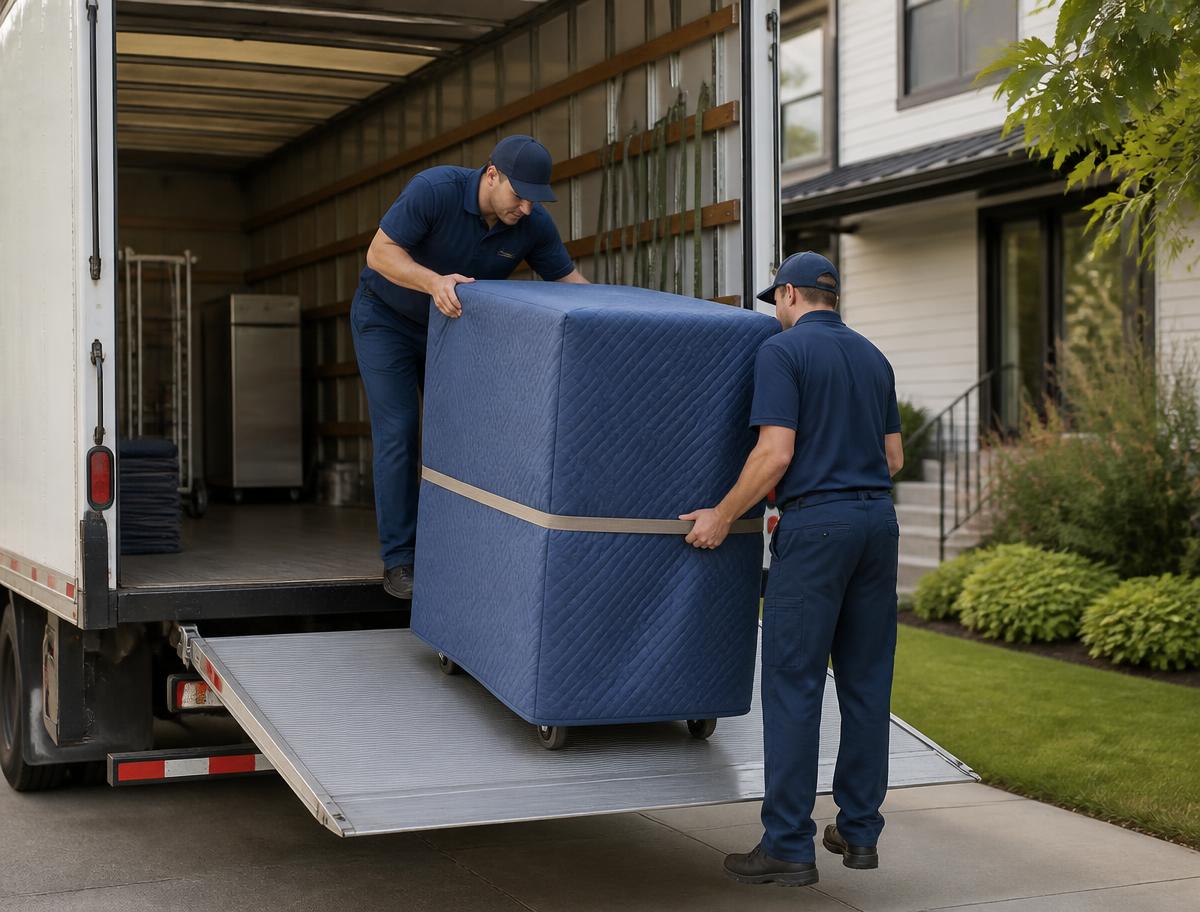
Beyond individual workstations, large-scale items like boardroom tables and executive suites require 'white-glove' treatment. These pieces are often the centerpiece of an office and represent a significant financial investment. We utilize heavy-grade moving blankets and shrink-wrap to protect polished wood surfaces from scratches or chips during the transition. By treating furniture as an architectural component rather than just cargo, we ensure that the aesthetic integrity of your new office is maintained. This meticulous attention to detail extends to the placement of furniture according to the new floor plan, ensuring ergonomic flow and compliance with local fire safety egress requirements.
- Inventory all specialized tools required for proprietary furniture brands.
- Label each panel with its corresponding workstation ID number.
- Check for concealed power strips and cable management trays during teardown.
- Ensure all glass desktop protectors are wrapped in corrugated cardboard.
- Validate that the new layout maintains 36-inch minimum aisle widths.
Managing Building Access and Logistical Constraints
Every commercial building in Belleville has its own set of rules and physical limitations. Some may have narrow freight elevators with weight capacities that restrict how many desks can be moved at once, while others might have restrictive loading zones that require permits from the city. A successful move starts with a site visit to both the origin and the destination to measure doorway clearances and hallway widths. It is not uncommon to find that a modern executive desk simply will not fit through a heritage building's staircase, necessitating a plan for disassembly or, in extreme cases, hoisting through a window.
Coordination with property management is essential to avoid fines or delays. Most commercial leases require tenants to provide a certificate of insurance (COI) from their moving company before any work begins. This insurance protects the building’s common areas—such as lobby floors, drywall, and elevator cabs—from damage during the move. We take proactive measures, such as using Masonite floor protectors and corner guards, to ensure that we leave both the old and new buildings in pristine condition. This professional approach facilitates a positive relationship between your business and your new landlord from day one.
Timing windows are another critical factor. Many downtown buildings restrict heavy loading to specific hours to avoid noise complaints from residential neighbors or to manage traffic flow in shared alleys. Understanding these constraints allows us to build a realistic timeline that doesn't result in overtime charges or stalled trucks. We also account for seasonal weather in the Quinte region; during winter moves, we prioritize snow clearance at loading docks and use moisture-absorbent runners to prevent salt and slush from damaging office carpets. Being prepared for the specific physical and regulatory environment of Belleville makes the difference between a smooth transition and a logistical bottleneck.
Optimizing the Packing Process for Business Continuity
Packing an office is vastly different from packing a home. While a homeowner might spend weeks slowly boxing items, a business needs to remain operational until the last possible moment. The key is to use standardized plastic moving crates instead of cardboard boxes. These crates are uniform in size, making them easy to stack and secure on dollies, and they eliminate the need for packing tape, which saves hours during both the packing and unpacking phases. Furthermore, these durable containers protect sensitive files and fragile office supplies much better than traditional corrugated cardboard ever could.
We recommend a tiered packing strategy. Non-essential items, such as archived files, seasonal decorations, or secondary supply cabinets, can be packed and moved weeks in advance to a storage facility or a designated 'low-priority' zone in the new office. Essential daily items are packed last, often by the employees themselves using a provided 'personal move kit.' By involving staff in the packing of their own immediate workspace, you ensure that they know exactly where their most important tools are located when they arrive at the new site. This decentralized approach speeds up the process and fosters a sense of ownership among the team.
Documentation and filing systems require a specialized touch. For legal firms or medical offices in Belleville, maintaining the order of physical files is non-negotiable. We utilize lateral file carts that allow entire drawers of files to be moved without removing the folders from their hangers. This prevents the catastrophic loss of organizational integrity that occurs when files are dumped into boxes. By maintaining the sequence of records throughout the move, we ensure that your administrative staff can resume their duties without having to spend days re-sorting archives, thereby protecting your business’s productivity and compliance standards.
- Use rentable plastic crates for superior stackability and protection.
- Color-code crates by department to streamline the offloading process.
- Provide each employee with a 'first-day' box for essential items.
- Shrink-wrap open shelving units to keep contents secure during transit.
- Clearly mark crates containing 'High Priority' administrative documents.
Budget Drivers and Cost Containment Strategies
Understanding what drives the cost of a commercial move allows Belleville business owners to make informed decisions that protect their bottom line. The primary cost driver is labor, which is directly tied to the volume of goods and the complexity of the move. Items that require extensive disassembly, such as custom-built reception desks or high-density filing systems, will naturally increase the time required. To contain costs, businesses can take on some of the 'pre-work' themselves, such as purging old documents and disposing of broken furniture before the moving crew arrives. Why pay to move items that will eventually end up in a landfill?
Another factor is the 'distance to truck.' If a moving crew has to push dollies across a large parking lot or navigate long hallways because a loading dock isn't available, the time spent on the job increases significantly. Strategic planning of the loading area can save hours of labor. Additionally, the timing of the move plays a role; peak moving dates like the end of the month often see higher demand. By choosing a mid-month date, you may find more flexibility and better rates. We provide transparent estimates that break down these variables, ensuring there are no surprises when the final invoice arrives.
Finally, the level of service chosen—ranging from a basic 'truck and driver' setup to a full 'white-glove' relocation—will impact the budget. While a full-service move has a higher upfront cost, it often proves more economical when considering the value of your staff's time. If your highly-paid associates are spending two days packing boxes instead of generating revenue, the 'cheap' move becomes very expensive. We work with Belleville businesses to find the right balance, providing professional equipment and expertise where it matters most while allowing the business to manage simpler tasks to keep costs within the desired range.
Safety, Compliance, and Risk Management
Safety is a paramount concern during any commercial relocation. The movement of heavy desks, large filing cabinets, and industrial equipment carries inherent risks that must be managed through proper training and the use of correct equipment. Professional movers are trained in ergonomic lifting techniques and the use of specialized tools like stair-climbing dollies and hydraulic lifts. This reduces the risk of workplace injuries, which could otherwise lead to costly WSIB claims or legal complications for the business owner. Ensuring that the moving team is fully insured and WSIB-compliant is a critical step in protecting your company from liability.
Compliance with local Belleville fire and safety codes is also essential when setting up the new office. A new furniture layout must not obstruct fire extinguishers, emergency exits, or pull stations. We work closely with your facility manager to ensure that the final placement of cubicles and partitions adheres to the approved architectural drawings. This attention to detail prevents future headaches during fire marshal inspections and ensures a safe environment for your employees. We also handle the responsible disposal or recycling of unwanted electronics (e-waste) according to Ontario environmental regulations, ensuring your business stays green.
Risk management also involves the protection of data and sensitive information. During a move, physical files and hardware are potentially exposed. We maintain a strict chain of custody, ensuring that trucks are locked during transit and that sensitive items are never left unattended in public hallways. For businesses in the legal, financial, or healthcare sectors, this level of security is not just a preference—it is a regulatory requirement. By choosing a locally owned partner with a reputation for integrity, Belleville businesses can rest assured that their physical and digital assets are handled with the highest level of professional care and confidentiality.
Conclusion: Your Partner in Belleville Business Growth
A successful office move is measured by what happens on Monday morning. When your employees arrive at a new space that is clean, organized, and fully functional, the transition becomes a catalyst for renewed energy and growth rather than a source of frustration. At Quinte Express, we specialize in the logistical heavy lifting that makes these transitions possible. As a locally owned trucking company based right here in Belleville, we have the local knowledge, the specialized equipment, and the dedicated team to handle relocations of any scale across Eastern Ontario.
Whether you are moving a small professional suite or a large corporate headquarters, our white-glove service ensures that your furniture, IT assets, and specialized equipment are handled with precision. We pride ourselves on our punctuality, our transparent pricing, and our commitment to minimizing your business's downtime. Ready to plan your next move? Contact Quinte Express today at 613-968-0909 for a comprehensive quote and let us help you take the next step in your business journey with confidence and ease.
Frequently asked
- How far in advance should I book my Belleville office move?
- For a standard office relocation, we recommend booking at least 4 to 6 weeks in advance. This allows enough time for a proper site survey, procurement of packing materials, and coordination with building management for elevator access. Larger corporations with complex IT needs may require 3 months of lead time to ensure every detail is synchronized with their technical migration.
- Do you provide packing materials like crates and labels?
- Yes, we provide high-quality plastic moving crates, which are more durable and eco-friendly than cardboard. We also supply specialized labels that won't damage your furniture and color-coded systems to match your new floor plan. Using our professional-grade supplies ensures that your items are properly protected and that the unloading process at the new location is as efficient as possible.
- Can you handle the reconnection of our computers and servers?
- While our crew excels at the safe transport and physical placement of IT equipment, we typically work alongside your internal IT team or a third-party managed service provider for the final cable patching and software configuration. We ensure all hardware is exactly where it needs to be, with cables organized and ready for your technicians to perform the final 'plug-and-play' setup.
- What happens if it rains or snows on our scheduled move day?
- As a Belleville-based company, we are experts at navigating Ontario's weather. We use heavy-duty floor runners, threshold mats, and waterproof wrap to protect your assets and the building interiors from moisture. If extreme weather poses a safety risk, we work closely with you to adjust the timing, but in most cases, our specialized equipment allows us to proceed safely regardless of the forecast.
Services in this article
Book this service in Belleville
Quinte Express is locally owned in Belleville, Ontario — white glove, last mile, furniture, appliance and parcel delivery across Kingston, Trenton, Ottawa and all of Ontario.